In this article
A Complete Guide to Taking Better Comic Book Photos That Build Buyer Confidence and Help Maximize Value
Whether you’re selling a single book or an entire collection, your photographs play one of the biggest roles in determining how buyers perceive your listing — and, in turn, its comic book value.
When someone shops online, they can’t hold your comic in their hands. They can’t tilt it under the light, inspect the spine, or flip through the pages. Instead, they rely entirely on your photographs to evaluate the comic’s condition and decide whether they feel comfortable making an offer or placing a bid.
High-quality photographs build trust. Poor photographs create uncertainty.
The more confidence buyers have in what they’re seeing, the more likely they are to purchase your comic and often at a higher price.
At Sparkle City Comics, we’ve evaluated countless comic books and purchased collections of every size over nearly fifty years. Learn more about Sparkle City Comics, or read the history of Sparkle City to see how that experience was built. Whether you’re selling on eBay, Instagram, Facebook Marketplace, collector forums, or another online platform, these are the same photography tips we recommend to collectors every day.
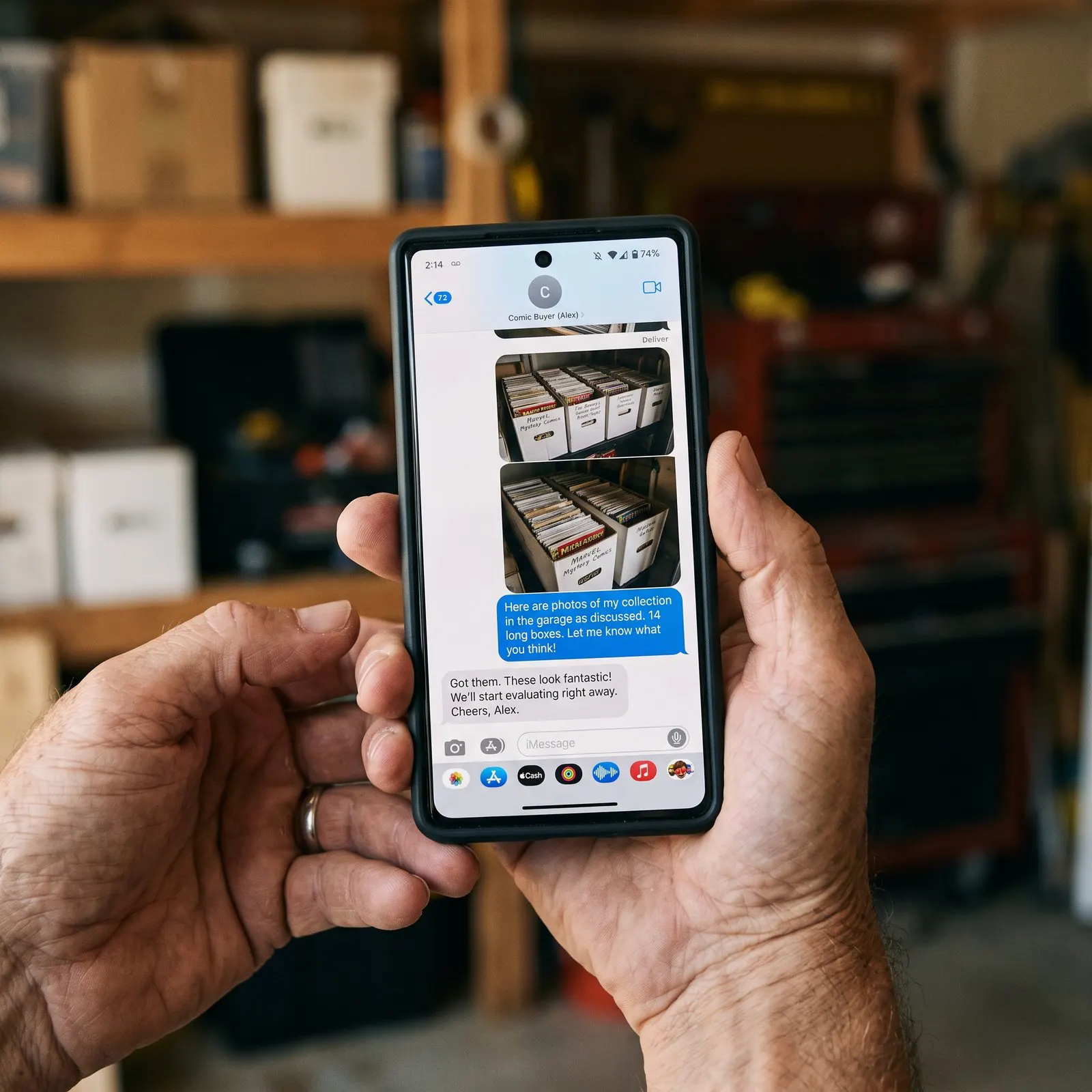
Dealer Tip: One clear photograph of twenty long boxes tells us far more than twenty close-up photographs of random comic covers. Start by showing the overall collection first, then let the buyer tell you which additional photographs would be most helpful.
Why Good Comic Book Photos Matter
Many sellers underestimate how much photographs influence a buyer’s decision.
Good photos don’t just make a comic look attractive—they answer questions before they’re asked.
Detailed photographs help buyers:
- Estimate the comic’s condition
- Look for restoration or repairs
- Inspect the spine and staples
- Evaluate page quality
- Identify defects
- Verify authenticity
- Feel more confident purchasing online
Better photographs often lead to:
- Higher selling prices
- More bids
- Faster sales
- Fewer questions
- Fewer returns
- Happier buyers
In short, good photography plays a direct role in the final value of comic books you’re selling.
Whenever possible, upload the original full-resolution photos directly from your phone rather than screenshots or images compressed through messaging apps. Higher-resolution files allow buyers to zoom in and inspect important details.
If a buyer has to guess what your comic looks like, they’ll usually assume the worst.
You Probably Already Have the Right Camera
One of the biggest misconceptions is that you need expensive photography equipment.
Fortunately, you don’t.
Modern smartphones produce excellent images that are more than sufficient for online comic sales.
Whether you’re using an iPhone or Android device, you’ll achieve excellent results if you focus on proper lighting and composition.
Before taking photographs:
- Clean the camera lens with a microfiber cloth.
- Use the highest resolution available.
- Turn off beauty filters and image enhancements.
- Use the standard camera app rather than screenshots or messaging apps.
Lighting matters far more than the camera itself.
Use Soft, Even Lighting
Lighting is the single most important factor in comic book photography.
Your goal is to show the comic exactly as it appears without creating glare that hides defects.
The best lighting options include:
- Indirect natural daylight
- Soft LED panel lights
- Bright diffused indoor lighting
Avoid:
- Camera flash
- Direct sunlight
- Yellow incandescent lighting
- Harsh overhead spotlights
If reflections appear on glossy covers, move the light source slightly rather than changing the comic’s position.
Choose a Simple Background
A clean background keeps the buyer’s attention where it belongs—on the comic.
Good choices include:
- White poster board
- Gray photography backdrop
- Black foam board
- Clean wooden tabletop
Avoid photographing comics on:
- Carpet
- Beds
- Kitchen counters
- Busy tables
- Patterned fabrics
Professional-looking backgrounds instantly make listings appear more trustworthy.
Keep Your Camera Parallel
Always try to photograph comics from directly above.
Holding your phone at an angle creates distortion that can make the comic appear warped.
Keeping the camera parallel creates:
- Straight edges
- Accurate proportions
- Better visibility
- Cleaner presentation
If you’re photographing multiple books, using the same angle throughout your listing creates a consistent, professional appearance.
Every Comic Listing Should Include These Photos
One of the biggest mistakes sellers make is only showing the front cover.
Experienced buyers want much more information.
For raw comic books, photograph:
- Front cover
- Back cover
- Full spine
- Top edge
- Bottom edge
- Left edge
- Right edge
- Centerfold
- Staples
- Interior pages (when appropriate)
- Coupons and inserts
- Signatures
- Certificates of authenticity
- Any significant defects
The more information you provide, the more comfortable buyers feel making a purchase.
Always Photograph the Defects
Many sellers try to hide flaws.
Experienced collectors immediately become suspicious when they can’t clearly see the condition.
Instead, photograph defects honestly.
Examples include:
- Spine stress
- Creases
- Tears
- Corner wear
- Water damage
- Foxing
- Detached staples
- Writing
- Tape
- Missing coupons
- Rust
- Stains
Honest listings build long-term trust and dramatically reduce the chances of returns or unhappy buyers.
Remember:
It’s almost always better for a buyer to discover a defect in your photographs than after the comic arrives.
Photographing Graded Comics
CGC and CBCS comics require slightly different photographs.
Be sure to include:
- Front of the slab
- Back of the slab
- Close-up of the certification label
- Corners of the holder
- Any scratches or cracks in the plastic case
When photographing CGC or CBCS books, take several images from slightly different angles. Plastic holders often create reflections that can hide the comic or make scratches in the case appear to be defects in the book itself.
Many buyers want to know whether imperfections are on the comic or simply on the holder.
Showing both eliminates confusion.
If your comics haven’t been graded yet, we can help determine whether professional comic book grading makes sense before you sell.
Photographing Original Comic Art
Original comic art requires even more documentation than published comics.
Include photographs of:
- Entire artwork
- Close-ups of pencil detail
- Ink detail
- Artist signatures
- Editorial notes
- Back of the artwork
- Certificates of authenticity
- Framing (if applicable)
Original comic art buyers often examine every detail before making a decision.
Photographing an Entire Comic Collection
Selling an entire collection is very different from selling individual comics.
There’s no need to photograph every comic before contacting a buyer.
Instead, start with overview photographs.
Helpful images include:
- The entire room
- Long boxes
- Shelving
- Storage area
- Representative books
- Key issues
- Graded comics
- Original comic art
- Toys and other collectibles
These overview photographs help professional buyers understand the scope of your collection before requesting additional information.
Should You Remove Comics From Their Bags?
It’s generally better to handle books as little as possible, but if glare becomes an issue, Yes.
Plastic bags often create glare and reflections that make it difficult to accurately evaluate condition. High-quality Mylar bags can create strong reflections under bright lighting. If glare prevents buyers from evaluating the comic, consider carefully removing the book from the sleeve before photographing it.
If you remove a comic:
- Handle it carefully.
- Avoid touching the cover unnecessarily.
- Replace it in a fresh archival bag after photographing.
For particularly valuable books, consider using cotton gloves if you’re uncomfortable handling them.
Never Alter or Enhance Photos to Hide Defects
One of the quickest ways to lose buyer confidence is by editing photographs in a way that changes the comic’s true appearance.
Today’s smartphones and photo editing apps make it easy to brighten colors, remove scratches, smooth creases, sharpen details, or use AI-powered enhancement tools. While these features may improve the appearance of a photograph, they can also create unrealistic expectations and lead to disappointed buyers, returns, or disputes.
Your goal should always be to accurately represent the comic—not make it appear better than it actually is.
Acceptable edits include:
- Cropping excess background
- Straightening the image
- Minor exposure adjustments
- Slight brightness correction
- White balance adjustments that accurately reflect the comic’s true colors
Avoid:
- AI image enhancement
- Heavy filters
- Increasing saturation
- Removing glare that hides defects
- Cloning or removing flaws
- Artificial sharpening
- Smoothing creases or spine stress
- Altering colors
- Generating or replacing portions of the image
- Editing out writing, stains, tears, or restoration
Experienced collectors often compare multiple photographs, request additional images, or inspect books under magnification. If your photographs exaggerate the comic’s condition, buyers will usually notice—and trust can disappear quickly.
Honest, unedited photographs may not always look perfect, but they build credibility, encourage confident buyers, and lead to smoother transactions. In the long run, accurate listings consistently outperform listings that rely on heavily edited or misleading images.
Common Comic Book Photography Mistakes
We regularly see otherwise valuable listings hurt by poor photographs.
Some of the most common mistakes include:
- Blurry images
- Flash glare
- Crooked photos
- Dark rooms
- Busy backgrounds
- Fingers covering the comic
- Low-resolution images
- Over-edited colors
- Missing back cover photos
- No spine photographs
Avoid Portrait Mode
Portrait mode is designed for people, not flat collectibles.
Because it artificially blurs the background using software, it can also soften comic edges, corners, or parts of the cover.
Use your phone’s standard photo mode instead to ensure the entire comic remains sharp and accurately represented.
Photograph Every Comic the Same Way
If you’re selling multiple comics, keep your setup consistent.
Use the same:
- Background
- Lighting
- Camera height
- Orientation
- Distance
A consistent presentation makes your listings appear far more professional and helps buyers compare books more easily.
Even rare comics can attract fewer bidders if buyers aren’t confident in what they’re seeing.
Dealer Insight: Don’t Photograph Thousands of Comics Too Soon
One of the biggest mistakes we see collectors make is spending days—or even weeks—photographing thousands of comics before they’ve spoken with a buyer.
If you’re selling an entire collection, start with:
- A few overview photographs
- Pictures of long boxes
- Several representative books
- Any key issues
- Graded comics
- Original comic art
That’s often enough for us to determine whether we should schedule a more detailed evaluation.
You may save yourself an enormous amount of unnecessary work.
Use Video to Build Even More Confidence and save time
While high-quality photographs are essential, a short video can often answer questions that still images cannot.
A slow, well-lit video allows buyers to see the comic from multiple angles while revealing details such as gloss, reflectivity, page quality, and the overall presentation of the book. It also helps reassure buyers that the comic being offered actually exists and accurately matches the photographs.
For valuable comic books, CGC-graded books, original comic art, or expensive collections, consider recording a brief 15–60 second video showing:
- The front cover
- The back cover
- The spine
- The corners
- The page edges
- The centerfold (when appropriate)
- Any significant defects
- The CGC or CBCS certification label
- The comic slowly tilted under light to show gloss and surface condition
For larger collections, a simple walkthrough video of the room, long boxes, shelving, and representative books can often communicate far more than dozens of still photographs.
Many online marketplaces now support video uploads or allow sellers to share videos through direct messages. A short video can answer questions much faster than sending dozens of additional photographs and often helps serious buyers make a purchasing decision more quickly.
Video isn’t always necessary, but for higher-value material it can significantly increase buyer confidence while reducing questions before the sale.
Selling to Sparkle City Comics Is Different
If you contact Sparkle City Comics about selling your collection, you don’t need hundreds—or even thousands—of photographs.
Instead, send us:
- A few overview images
- Photos of long boxes or shelving
- Pictures of key comics
- Images of CGC or CBCS books
- Photos of original comic art or other collectibles
From there, we’ll discuss your collection, answer your questions, and determine the best next step.
For larger collections, we may even travel to evaluate everything in person.
Frequently Asked Questions
Can I Use My Phone to Photograph Comics?
Absolutely. Modern smartphones produce outstanding photographs when paired with good lighting and a clean background.
Should I Photograph Every Defect?
Yes. Honest photographs build buyer confidence and reduce misunderstandings after the sale.
Should I Remove Comics From Their Bags?
Usually. Plastic bags often create glare that makes it difficult for buyers to evaluate condition accurately.
How Many Pictures Should I Include?
More than you think. For valuable comics, it’s almost impossible to include too many useful photographs. Buyers appreciate complete documentation.
How Should I Photograph a Large Collection?
Start with overview photographs showing the collection as a whole, followed by representative books and any significant keys.
There’s no need to individually photograph thousands of comics before contacting a professional buyer.
Should I Edit My Photos?
Basic adjustments such as cropping and straightening are perfectly acceptable.
Avoid editing that changes the comic’s appearance or hides defects.
Should I Photograph the Inside Pages?
For valuable comics, yes. Interior photographs can help document page quality, centerfold attachment, signatures, coupons, Marvel Value Stamps, writing, detached staples, restoration, and other details that may affect value or buyer confidence. For lower-value books, front, back, and spine photographs are often sufficient.
Better Photos Lead to Better Offers
Great comic book photography isn’t about owning expensive equipment.
It’s about reducing uncertainty.
The more clearly buyers can evaluate your comic’s condition, the more confidence they’ll have in making a purchase. The goal isn’t to make your comic look better, it’s to help buyers see it clearly enough that they feel confident making a purchase.
If you’re selling a single comic online, taking the time to create clear, honest photographs can help maximize buyer confidence and often lead to stronger offers.
If you’re selling an entire collection, however, don’t assume you need to photograph every comic before reaching out. In many cases, a handful of overview photographs is all we need to begin evaluating your collection and discussing the best strategy for maximizing its value.
Whether you’re looking to sell comic books for cash,, get a professional appraisal, consign your comics, or simply get honest advice about your options, Sparkle City Comics is here to help.