
In this article
Quick Summary
The different comic book ages are the Platinum Age (before 1938), Golden Age (1938–1956), Silver Age (1956–1970), Bronze Age (1970–1985), Copper Age (1985–1992), and Modern Age (1992–present). Each era reflects shifts in storytelling, publishing, and collector demand. A comic’s age gives context about rarity and significance, but condition, scarcity, and first appearances matter just as much for value.
If you’ve collected comic books, browsed auction listings, or researched a collection’s value, you’ve likely seen terms like Golden Age, Silver Age, Bronze Age, or Modern Age. Understanding the different comic book ages is one of the best ways to make sense of what you own.
These labels mark distinct periods in comic book history, reflecting changes in storytelling, artwork, publishing, collector demand, and popular culture. Knowing them helps collectors identify what they own, date a comic, and understand why certain books are historically significant.
For people who inherit or discover a collection, learning the eras is often the first step. A comic’s age doesn’t automatically determine its value, but it provides context about rarity, historical importance, and collector demand.
At Sparkle City Comics, we’ve spent nearly fifty years buying collections ranging from Golden Age classics to today’s newest releases, and every era has something special: the birth of Superman, the Marvel revolution of the 1960s, the darker storytelling of the Bronze Age, and the explosion of independent publishers in the Modern era.
Comic Book Age Timeline
No single organization officially defines the comic book ages, but most collectors, dealers, grading companies, and price guides recognize this timeline:
| Comic Book Age | Approximate Years | Defining Characteristics |
|---|---|---|
| Platinum Age | Before 1938 | Newspaper strips, comic magazines, early comic publications |
| Golden Age | 1938–1956 | Birth of superheroes, World War II, early comic industry |
| Silver Age | 1956–1970 | Marvel revolution, revival of superheroes, Comics Code era |
| Bronze Age | 1970–1985 | Darker themes, horror revival, first major antiheroes |
| Copper Age | 1985–1992 | Independent publishers, direct market growth, speculation begins |
| Modern Age | 1992–Present | Image Comics, variants, CGC, movies, global collector market |
These dates aren’t absolute. Some collectors shift an era’s boundaries by a year or two, particularly between the Bronze, Copper, and Modern Ages, but those differences rarely matter for most collections.
Why Are Comic Books Divided Into Ages?
Comic books didn’t change overnight. Each age reflects gradual shifts in society, technology, publishing, and reader interests.
The Golden Age introduced superheroes around World War II, the Silver Age reimagined them and introduced many of Marvel’s most iconic characters, the Bronze Age moved toward more mature storytelling, the Copper Age saw independent publishers and comic specialty stores grow, and the Modern Age brought digital technology, blockbuster superhero films, and a global collector market.
Knowing a comic is Silver Age tells an experienced collector about its storytelling style, printing methods, publisher landscape, and likely characters, along with clues about rarity, demand, and the likelihood of important first appearances or milestone issues.
Does the Age of a Comic Determine Its Value?
One of the biggest misconceptions we encounter is that older comics are automatically worth more. Age is only one factor.
A worn Golden Age comic may sell for less than a pristine Modern key issue. Many Bronze and Copper Age comics are among today’s fastest-appreciating books because of first appearances, limited print runs, or demand driven by movies and television.
When evaluating a collection, we also consider condition, scarcity, first appearances, collector demand, print runs, completeness, original ownership, professional grading, and current market trends. Age simply provides the historical framework for evaluating everything else.
Why Collectors Care About Comic Book Ages
Comic book ages are part of the language collectors use every day. Descriptions like “Mostly Silver Age Marvel,” “A complete Bronze Age Batman run,” “Golden Age horror,” “Copper Age independent books,” or “Modern variants” immediately tell an experienced collector what to expect.
For sellers, these categories help communicate a collection’s scope when requesting an evaluation. “Silver Age Marvel comics” is far more informative than “some old comic books.”
The Platinum Age (Before 1938)
Most collectors begin the story with Superman’s debut in 1938, but comics stretch back much further.
The Platinum Age covers the period before superhero comic books, when comic publications evolved from newspaper strips into standalone magazines that laid the foundation for the industry.
Instead of superheroes, readers enjoyed humorous newspaper strips, adventure serials, detective stories, educational comics, and illustrated humor.
The most significant publication was Famous Funnies #1 (1934), often recognized as the first successful modern comic book. It proved there was a commercial market for the format.
Notable publishers included Eastern Color Printing, Dell Publishing, National Allied Publications (the predecessor to DC Comics), and United Features Syndicate. Popular characters included Popeye, Mutt and Jeff, Little Orphan Annie, Dick Tracy, and numerous Disney characters.
Platinum Age comics receive less attention than later superhero books but remain highly desirable among advanced collectors for their age, historical significance, and rarity.
Complete Platinum Age collections are uncommon. When they appear, they often come from estates or multi-generational family collections.
The Golden Age (1938–1956)
Action Comics #1 (June 1938) introduced Superman and transformed comic books almost overnight.
His success sparked an explosion of new characters and publishers. Within a few years came Batman, Robin, Wonder Woman, Captain America, Green Lantern, The Flash, Hawkman, Plastic Man, The Human Torch, Sub-Mariner, and countless others.
The World That Created the Golden Age
The Golden Age grew out of the Great Depression and World War II. For a few cents, readers could escape into adventures with heroes defeating criminals, monsters, spies, and eventually the Axis powers.
Many covers reflected current events. Captain America famously punched Adolf Hitler months before the United States entered World War II, Superman promoted war bonds, and Batman and Robin joined patriotic campaigns.
More Than Just Superheroes
Superheroes dominate discussions of the Golden Age today, but publishers also produced westerns, crime, detective stories, romance, funny animal comics, humor, science fiction, jungle adventures, war comics, teen humor, and, late in the era, horror.
Many original-owner Golden Age collections we purchase contain far more Dell Disney comics, westerns, and romance books than superhero titles. That’s completely normal: readers in the 1940s and early 1950s bought whatever interested them on the spinner rack.
Major Golden Age Publishers
Dozens of publishers competed for readers, including National Comics (later DC Comics), Timely Comics (later Marvel Comics), Fawcett Publications, Quality Comics, EC Comics, Lev Gleason Publications, MLJ Comics (later Archie Comics), Dell Comics, Harvey Comics, and Fox Feature Syndicate.
Some introduced characters still popular today; others disappeared long ago but left behind highly collectible books.
Some of the Most Important Golden Age Comics
Several books stand above the rest: Action Comics #1 (first Superman), Detective Comics #27 (first Batman), Marvel Comics #1 (the original Human Torch and Sub-Mariner), Captain America Comics #1, All Star Comics #8 (first Wonder Woman), Flash Comics #1 (first Flash), and Sensation Comics #1 (Wonder Woman’s first ongoing series). These routinely rank among the most valuable comics ever sold.
Very few collections contain books of this caliber, but that doesn’t mean other Golden Age comics lack value.
What Most Golden Age Collections Actually Look Like
Many people expect every Golden Age collection to contain Superman, Batman, or Captain America. Most actually consist of comics that were popular with everyday readers: Walt Disney titles, Looney Tunes, westerns, romance, funny animal books, war comics, Dell Four Color issues, adventure stories, early science fiction, detective comics, humor titles, Good Girl/Cheesecake art, and Pre-Code horror.
Many of these books have become increasingly desirable because fewer collectors preserved them than the major superhero titles. Most were read, traded, and thrown away, and many more were lost to wartime paper drives.
Complete runs, original-owner collections, and exceptionally well-preserved examples can command strong interest even without famous superheroes.
Why Collectors Love the Golden Age
Golden Age comics are the foundation of the modern industry. Collectors value the historical connection to World War II, the bold artwork and colorful covers, early appearances of iconic superheroes, and crime, horror, romance, western, and funny animal comics that are increasingly difficult to find in high grade.
Above all, they come from a time when every publisher was still experimenting with new ideas, genres, and characters.
The Atomic Age (1946–1956)
Many price guides include these years in the Golden Age, but a growing number of collectors recognize the Atomic Age as a distinct subset of the late Golden Age, reflecting cultural changes after World War II.
As superhero comics declined after the war, new genres took their place. Crime comics grew grittier, romance became one of the industry’s biggest successes, and science fiction reflected fascination with rockets, atomic energy, and life beyond Earth.
Most famously, horror comics reached extraordinary popularity.
EC Comics produced groundbreaking titles such as Tales from the Crypt, Vault of Horror, and The Haunt of Fear, combining unforgettable artwork with morally complex stories that still influence comics, film, and television.
The era also produced crime titles like Crime SuspenStories, influential romance comics pioneered by Joe Simon and Jack Kirby, and science-fiction series inspired by Cold War anxieties and the dawn of the Space Age.
The Atomic Age ended abruptly in the mid-1950s after public criticism of comic books, Senate hearings on juvenile delinquency, and the creation of the Comics Code Authority in 1954. Many publishers disappeared, horror and crime were toned down, and the industry’s reinvention led to the Silver Age.
Today, Atomic Age comics are one of the fastest-growing areas of the hobby, with rising appreciation for pre-Code horror, crime, romance, and science-fiction titles.
The Silver Age (1956–1970)
For many collectors, the Silver Age is the greatest creative period in comic book history.
The Silver Age reinvented superheroes for a new generation, moving from simple children’s adventures to stories with flawed heroes, complex villains, and interconnected fictional universes.
Spider-Man, the Fantastic Four, the X-Men, the Avengers, Iron Man, Daredevil, Doctor Strange, and the Justice League all trace their roots to this era, making it one of the most actively collected in the hobby.
The Beginning of the Silver Age
Most collectors mark the beginning with Showcase #4 (October 1956), which introduced a reimagined Flash. Rather than reviving the Golden Age hero, DC created Barry Allen, with a modern costume, updated origin, and stronger science-fiction foundation.
The book proved superheroes could sell again, and DC quickly followed with modern versions of Green Lantern, Hawkman, The Atom, the Justice League of America, and other classic characters.
The Marvel Revolution
DC sparked the Silver Age, but many collectors believe Marvel defined it. Beginning in 1961, writer Stan Lee, artists Jack Kirby and Steve Ditko, and other legendary creators introduced characters who struggled with real-world problems.
Peter Parker worried about bills, school, and relationships. The Fantastic Four argued like a real family, the X-Men faced prejudice, and the Hulk battled his own inner monster. These imperfections helped readers connect, and the “Marvel Age” had begun.
The Books That Changed Comics Forever
The Silver Age produced many of the most valuable first appearances ever published, including:
- Amazing Fantasy #15 – First appearance of Spider-Man
- Fantastic Four #1 – First appearance of Marvel’s First Family
- Journey Into Mystery #83 – First appearance of Thor
- Tales of Suspense #39 – First appearance of Iron Man
- The Incredible Hulk #1 – First appearance of the Hulk
- X-Men #1 – First appearance of the original X-Men
- The Avengers #1 – Formation of Earth’s Mightiest Heroes
- Daredevil #1 – First appearance of Daredevil
- Strange Tales #110 – First appearance of Doctor Strange
- Showcase #22 – First appearance of Hal Jordan as Green Lantern
- Justice League of America #1 – First issue of the Justice League
These books consistently rank among the most sought-after comics in the hobby and sell for substantial sums in high grade.
Science, Space, and Optimism
The Silver Age reflected post-war optimism. The Space Race, nuclear technology, and the early years of NASA influenced storytelling, and many heroes gained powers through scientific accidents, radiation, or experiments gone wrong.
Spider-Man was bitten by a radioactive spider, the Fantastic Four encountered cosmic radiation, Bruce Banner became the Hulk after gamma radiation exposure, and the X-Men were born with genetic mutations.
The Rise of the Marvel Universe
Marvel’s characters shared one universe. Spider-Man could meet the Fantastic Four, the Avengers could battle villains introduced in Thor, and the X-Men might reference events in other titles. That interconnected world became the foundation for modern superhero storytelling across comics, television, and film.
DC Continues to Evolve
DC remained enormously influential, modernizing its Golden Age heroes while introducing new concepts. Barry Allen became the new Flash, Hal Jordan replaced Alan Scott as Green Lantern, the Justice League united DC’s greatest heroes, Batman experienced a creative resurgence, and Superman titles dominated newsstands.
DC also introduced alternate dimensions, parallel Earths, and elaborate mythology that still influences comics today.
The Comics Code Authority
The Comics Code Authority, created in 1954, imposed strict guidelines on violence, horror, crime, language, and other content. Many horror and crime publishers disappeared, while superhero comics, with clearly defined heroes and villains, flourished.
Some creators found the Code restrictive, but it shaped the tone of Silver Age storytelling and remained dominant for decades.
What Silver Age Collections Usually Look Like
Many people imagine every Silver Age collection contains Amazing Fantasy #15 or Fantastic Four #1. In reality, most original-owner collections we purchase contain long runs of regularly purchased comics: Fantastic Four, Amazing Spider-Man, Avengers, X-Men, Journey Into Mystery, Tales to Astonish, Tales of Suspense, Superman, Batman, Justice League of America, Flash, Green Lantern, Lois Lane, Jimmy Olsen, Archie Comics, Dell and Gold Key titles, Walt Disney comics, westerns, and humor comics.
Complete runs can be just as exciting as key books because they tell the story of a collector who visited the newsstand month after month for years.
Why Silver Age Comics Remain So Popular
The Silver Age introduced many of the characters that dominate today’s movies, television, streaming, and video games, yet its books are old enough to be genuinely scarce while still obtainable.
Historical importance, iconic first appearances, beautiful artwork, and cultural influence have kept demand strong for decades, whether someone collects Marvel, DC, horror, westerns, romance, or funny animal comics.
Buying Silver Age Collections Today
Silver Age collections remain among our most sought-after purchases. Many were assembled by original owners who bought comics from neighborhood drugstores, grocery stores, and spinner racks in the 1950s and 1960s, then sat in closets, attics, or basements for decades until children or grandchildren rediscovered them.
Famous keys get the most attention, but complete runs, high-grade examples, and well-preserved original-owner collections often generate just as much excitement.
Every box can tell a story. Sometimes it includes a major first appearance; other times it’s a collector who never missed an issue for fifteen years. Both attract enthusiastic collectors today.
The Bronze Age (1970–1985)
If the Silver Age represented superhero optimism, the Bronze Age reflected a more complicated world. Beginning around 1970, writers tackled drug addiction, racism, environmental issues, political corruption, poverty, war, and mental health.
Artists experimented with more realistic styles, publishers expanded into new genres, and new types of heroes emerged.
For many collectors, the Bronze Age balances the colorful imagination of the Silver Age and the darker realism of modern comics.
Why the Bronze Age Began
The transition happened gradually, but many collectors point to Green Lantern/Green Arrow #76 (1970) by Dennis O’Neil and Neal Adams as the unofficial beginning.
Instead of battling colorful supervillains, the heroes confronted racism, drug addiction, urban poverty, political distrust, and social inequality. Comic books were growing up.
Comic Books Became More Realistic
Bronze Age heroes weren’t always perfect, villains became more sympathetic, and characters suffered lasting consequences. Death, once almost unheard of in mainstream superhero comics, became an important storytelling device.
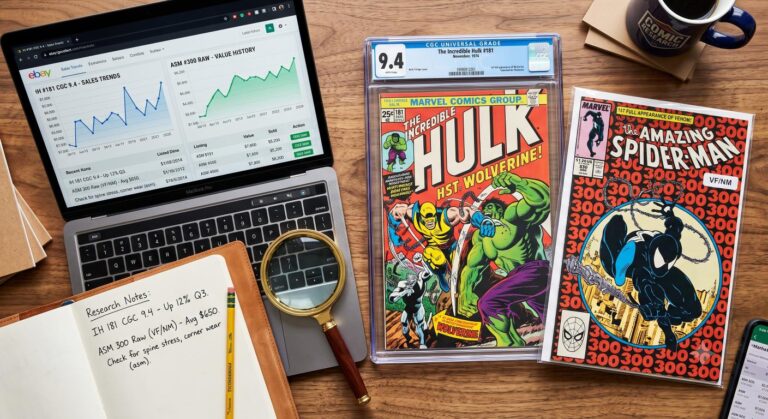
The most famous example is The Amazing Spider-Man #121, the death of Gwen Stacy, which for many readers marked the end of the carefree Silver Age.
The Rise of Horror
The Bronze Age brought horror back. As the Comics Code Authority relaxed its restrictions in the early 1970s, publishers revisited monsters, vampires, werewolves, and supernatural themes that had largely disappeared after the 1950s.
Marvel launched Tomb of Dracula, Werewolf by Night, Ghost Rider, Man-Thing, and The Monster of Frankenstein. DC responded with Swamp Thing, House of Mystery, House of Secrets, Weird War Tales, and Secrets of Haunted House.
These books remain highly collectible, particularly high-grade copies and important first appearances.
The Antihero Arrives
The Bronze Age also introduced morally complex heroes who struggled with personal demons, revenge, guilt, and difficult choices. Key first appearances include:
- Wolverine (Incredible Hulk #180–181)
- Punisher (Amazing Spider-Man #129)
- Moon Knight (Werewolf by Night #32)
- Blade (Tomb of Dracula #10)
- Nova
- Ms. Marvel
These characters continue to play major roles in comics, movies, and television, making their first appearances some of the most desirable Bronze Age keys.
Fantasy, Science Fiction, and Licensed Comics
Marvel’s Conan the Barbarian proved fantasy comics could attract a large audience, introducing many readers to Robert E. Howard’s legendary hero and inspiring countless sword-and-sorcery titles.
After the original Star Wars film in 1977, licensed comics exploded. Marvel’s Star Wars #1 became one of the era’s defining books, and television, movies, cartoons, and toys increasingly influenced what publishers produced, a relationship that continues today.
Legendary Creators
The era’s celebrated creators include Neal Adams, Dennis O’Neil, John Byrne, Frank Miller, George Pérez, Walt Simonson, Jim Starlin, Chris Claremont, Marv Wolfman, Len Wein, and Bernie Wrightson. Their work helped establish comics as a respected storytelling medium rather than simply children’s entertainment.
The Direct Market Changed Everything
Behind the scenes, comic specialty stores began replacing newsstands. In this Direct Market, shops ordered directly from distributors, generally on a non-returnable basis, giving publishers more predictable sales and collectors wider selections.
Comic shops also became gathering places for enthusiasts, and the Direct Market remains the backbone of the industry today.
What Bronze Age Collections Usually Look Like
Many collections we purchase were assembled by collectors who bought comics every month through the 1970s and early 1980s, creating impressive, often well-preserved runs. A typical Bronze Age collection may include Amazing Spider-Man, Uncanny X-Men, Avengers, Fantastic Four, Conan the Barbarian, Tomb of Dracula, Ghost Rider, Swamp Thing, Batman, Detective Comics, Superman, Justice League, Star Wars, Micronauts, ROM, Richie Rich, Archie, Disney comics, Gold Key titles, Charlton Comics, and Warren magazines.
Many collectors are surprised that complete runs can be just as attractive to buyers as individual key issues.
Why Bronze Age Comics Continue to Rise
Bronze Age comics have grown tremendously over the past decade. Collectors who grew up in the 1970s can now afford the comics they couldn’t as children, and movies and streaming series keep introducing Wolverine, Punisher, Moon Knight, Blade, and other Bronze Age characters to new audiences.
High-grade copies are increasingly difficult to locate because many comics from this period were read repeatedly before collectors fully embraced preservation.
Buying Bronze Age Collections Today
Bronze Age collections remain some of our favorite purchases. Many owners bought from spinner racks, neighborhood drugstores, or the first comic specialty stores, then left their books untouched for years.
We often see long, uninterrupted Marvel and DC runs alongside horror comics, licensed books, magazines, and independent publications. Well-organized, original-owner collections frequently contain overlooked treasures the owners didn’t realize had become desirable, from a complete Uncanny X-Men run or early Swamp Thing to beautifully preserved newsstand copies.
The Copper Age (1985–1992)
The Copper Age saw the rapid growth of independent publishers, darker storytelling, collector speculation, direct-market comic shops, and groundbreaking creators. Many collectors consider it the bridge between traditional comic books and the modern hobby.
Most collectors place its start around 1985, with the era ending in the early 1990s as the speculation boom and Image Comics ushered in the Modern Age.
Comic Books Grew Up
By the mid-1980s, comics explored politics, psychology, morality, religion, violence, and social issues with new sophistication, and superheroes had to live with the consequences of their decisions. Many of these stories are considered among the greatest comic books ever written.
Watchmen and The Dark Knight Returns
Released in 1986, Watchmen and Batman: The Dark Knight Returns showed that superhero comics could be serious literature.
Frank Miller’s The Dark Knight Returns reimagined Batman as an aging vigilante in a darker, more realistic Gotham City. Alan Moore and Dave Gibbons’ Watchmen questioned the concept of superheroes through deeply flawed characters in a Cold War alternate America.
Both elevated public perception of comics and are still ranked among the most important graphic storytelling achievements ever published.
The Rise of Independent Publishers
Independent publishers such as Eclipse Comics, First Comics, Comico, Dark Horse Comics, Pacific Comics, and Kitchen Sink Press achieved unprecedented success, proving creators could thrive outside the superhero model with science fiction, fantasy, crime, horror, satire, and autobiographical stories.
Teenage Mutant Ninja Turtles Changed Everything
Few independent comics have had a greater impact than Teenage Mutant Ninja Turtles #1, published in black and white by Kevin Eastman and Peter Laird in 1984. What began as a parody became one of the world’s most successful entertainment franchises, and early TMNT comics remain some of the era’s most desirable books.
The Black-and-White Boom
TMNT’s success sparked what collectors call the Black-and-White Boom. Thousands of titles appeared and most disappeared almost immediately, but some are now surprisingly collectible because of low print runs and historical significance.
When we evaluate Copper Age collections, sellers who assume only Marvel and DC have value often overlook these independent books, and they can be some of the most interesting discoveries in a collection.
Creator-Owned Comics
The Copper Age also saw a growing push for creator ownership, as writers and artists sought publishers that would let them own their characters instead of working under work-for-hire arrangements. That movement eventually led to companies like Image Comics.
The Direct Market Comes of Age
The Direct Market truly became the center of collecting during the Copper Age. Collectors visited dedicated comic stores for new releases, back issues, graphic novels, supplies, and collectibles, and many of today’s retailers opened during this period.
Graphic Novels Become Mainstream
Publishers increasingly released complete stories in book format, allowing longer narratives and attracting readers who never bought monthly comics. Graphic novels remain one of the fastest-growing areas of publishing.
What Copper Age Collections Usually Look Like
Copper Age collections reflect the era’s diversity. It’s common to find Batman, Superman, Spider-Man, X-Men, Teen Titans, Daredevil, Watchmen, The Dark Knight Returns, Teenage Mutant Ninja Turtles, Elfquest, Cerebus, Love and Rockets, independent black-and-white comics, early Dark Horse titles, graphic novels, limited series, and prestige format books.
Collectors from this period often embraced both Marvel and independent publishers, making Copper Age collections especially varied.
The Beginning of Comic Book Speculation
The Copper Age also marked the beginning of organized speculation. As collectors realized first appearances, limited print runs, and key issues could appreciate, publishers responded with limited series, anniversary issues, deluxe editions, prestige format books, special covers, and collector-focused marketing. Speculation peaked in the early 1990s, but its foundations were laid here.
Why Copper Age Comics Matter Today
Collectors sometimes overlook the Copper Age because it sits between the Bronze and Modern Ages, but many of today’s most influential creators emerged then. Independent publishing became a major force, graphic novels gained respect, comic shops flourished, and creator-owned comics laid the groundwork for Image Comics, Vertigo, and much of today’s hobby.
Buying Copper Age Collections Today
Copper Age collections are often full of surprises. Alongside Marvel and DC, we regularly find independent comics, limited series, prestige-format books, graphic novels, and black-and-white publications owners haven’t looked at in decades.
Not every Copper Age comic is valuable, but the era has many important first appearances, influential storylines, and low-print-run independent books, plus complete runs built by collectors who embraced the comic shop culture of the late 1980s.
Some of the most memorable collections we’ve purchased from this era stood out not for a single expensive key but because they captured a hobby that was rapidly evolving.
The Modern Age (1992–Present)
The Modern Age has been shaped by creator-owned publishing, blockbuster films, third-party grading, the internet, and a global collector market. It has produced some of the highest-selling comics ever printed, and some of the rarest and most valuable modern books.
Many people assume “newer comics aren’t worth much,” but some modern comics have sold for tens of thousands of dollars only a few years after publication.
The Birth of Image Comics
In 1992, Todd McFarlane, Jim Lee, Rob Liefeld, Marc Silvestri, Erik Larsen, Jim Valentino, and Whilce Portacio left Marvel to form Image Comics, where creators would retain ownership of their characters.
Readers embraced Spawn, WildC.A.T.s, Savage Dragon, Youngblood, Cyberforce, and ShadowHawk. Image proved creator-owned comics could compete with Marvel and DC, and it remains one of the industry’s most respected publishers.
The Speculation Boom
The early 1990s brought an unprecedented speculation boom. Collectors, investors, and the general public bought multiple copies expecting rapid gains, and publishers responded with foil, embossed, and hologram covers, polybagged editions, trading cards, limited editions, special collector’s issues, and multiple printings.
Some comics sold millions of copies, so while a handful remain valuable, most are inexpensive decades later. The boom collapsed in the mid-1990s, closing many comic shops and publishers before the industry gradually rebuilt.
Third-Party Grading Changed Collecting
Third-party grading was another milestone. Certified Guaranty Company (CGC) standardized grading, authentication, restoration detection, and encapsulation, giving buyers confidence and making online sales far easier.
Many of today’s highest-value sales involve professionally graded copies, yet countless valuable collections remain ungraded, particularly original-owner collections that have never entered the marketplace.
The Internet Changed Everything
Before the internet, collectors bought from local comic shops, conventions, mail-order catalogs, or price guide advertisements. Auction platforms, online retailers, grading registries, collector forums, and social media improved price transparency, made rare books easier to locate, and let a buyer in New York purchase a comic from California, Canada, or Europe in a few clicks.
Movies Created New Generations of Collectors
Movies like X-Men, Spider-Man, Iron Man, and later the Marvel Cinematic Universe introduced millions of people to comic characters. Movie announcements now drive demand for first appearances, origin stories, key villains, and supporting characters, and even obscure books can attract worldwide attention after a casting announcement or trailer.
Movie speculation can cause short-term price fluctuations, but it has also introduced countless new collectors to the hobby.
Independent Comics Flourish
Independent publishers such as Image Comics, Dark Horse Comics, BOOM! Studios, IDW Publishing, Dynamite Entertainment, and Oni Press have reached unprecedented success. Titles like The Walking Dead, Saga, Invincible, and Something Is Killing the Children show that some of today’s most influential comics come from outside the traditional superhero universe.
What Modern Collections Usually Look Like
Modern collections vary enormously, from superhero runs to independent publishers, horror, manga, graphic novels, or variant covers. Common books include Batman, Amazing Spider-Man, X-Men, Spawn, Invincible, The Walking Dead, Saga, Ultimate Marvel, Harley Quinn, Venom, Deadpool, independent horror, store-exclusive variants, convention exclusives, ratio incentive covers, graphic novels, and manga.
Many collectors also maintain complete subscription runs purchased directly from comic shops over many years.
Are Modern Comics Valuable?
Yes, but not always for the reasons people expect. Modern value often comes from scarcity rather than age, so a five-year-old comic with an extremely small print run may be worth more than a common comic published thirty years ago.
Important first appearances, retailer incentive variants, convention exclusives, recalled editions, and exceptionally high-grade copies frequently command strong prices.
Meanwhile, millions of common Modern comics carry modest value, so knowing which books are desirable requires staying current with a rapidly changing market.
Buying Modern Collections Today
We purchase Modern collections every week, and no two are alike. Some hold complete superhero runs; others focus on independent horror, creator-owned series, manga, graphic novels, or curated variants. Many collectors today buy fewer comics than previous generations but emphasize condition, limited editions, and key first appearances.
Some of today’s strongest-performing books are less than twenty years old: a scarce retailer incentive variant, an early issue of The Walking Dead, a first appearance from the Ultimate universe, or a high-grade modern key.
The Modern Age is still being written, with new characters, publishers, and future key issues arriving on comic shop shelves every month.
The Current Comic Book Era (2010–Present)
Most collectors consider everything published since the early 1990s part of the Modern Age, but the market has changed dramatically over the past fifteen years. Publishers now produce multiple covers, retailer and convention exclusives, sketch covers, crowdfunding projects, creator-owned series, and limited releases that can become highly sought after almost overnight.
Variant Covers
Publishers often release several covers for each issue, featuring different artists. A single comic might have a standard “Cover A,” Covers B and C, plus virgin, foil, connecting, wraparound, black-and-white, glow-in-the-dark, and anniversary variants.
Some are printed in very large quantities, while others are intentionally limited or extraordinarily scarce. Rarity often depends on retailer orders rather than simple publication numbers, so telling them apart takes experience.
For many collectors, the artwork matters as much as the comic inside, and variant collecting is now an entire specialty within the hobby.
Ratio Incentive Covers
Some of the most valuable modern comics are ratio incentive variants. Retailers must order a set number of standard copies, at ratios such as 1:10, 1:25, 1:50, 1:100, or 1:200, to receive one incentive cover; a 1:100 variant generally requires one hundred regular copies.
If demand for the regular issue is low, very few incentive variants reach the marketplace, creating genuine scarcity.
Still, a higher ratio doesn’t guarantee higher value. A 1:100 variant of an unpopular title may be worth less than a 1:25 variant featuring the first appearance of an important new character. Collector demand ultimately determines value.
Store Exclusive Variants
Many comic shops commission store exclusive covers available only through that retailer or a small group of participating stores. Some produce only a few hundred copies; others release multiple printings or editions based on purchase packages.
Collectors pursue exclusives featuring favorite artists, limited print runs, or first appearances that later become significant. Because many sell only online for a limited time, they can be surprisingly difficult to locate later.
Convention Exclusives
Convention exclusives have become increasingly important over the past decade. Events such as San Diego Comic-Con, New York Comic Con, Emerald City Comic Con, C2E2, and HeroesCon feature comics available only to attendees or through exhibitors, often with unique covers, foil treatments, signatures, or packaging from publishers, artists, grading companies, and retailers.
Some remain inexpensive souvenirs; others become highly sought after because few copies were produced or because they commemorate important first appearances or milestone anniversaries.
Blank Sketch Covers
Blank sketch covers have no printed artwork, so collectors commission artists at conventions to draw one-of-a-kind illustrations directly on the comic, from aspiring artists to legendary creators responsible for the character.
Because each is unique, value depends on the artist, subject matter, quality of the artwork, and professional authentication. Sketch covers combine comic collecting with original comic art.
Signed Editions and Witnessed Signatures
Collectors increasingly seek comics signed by writers, artists, cover artists, actors, voice actors, editors, or publishers. Witnessed signatures, authenticated through third-party grading companies’ signature verification programs, generally carry greater market confidence because the signing was independently documented.
As with any collectible, a signature’s importance depends on who signed the book and their significance to collectors.
Independent Comics Are Thriving
Today’s independent scene is stronger than ever, with publishers such as Image Comics, BOOM! Studios, Dark Horse Comics, Oni Press, Mad Cave Studios, Vault Comics, DSTLRY, and Massive Publishing producing critically acclaimed titles. Many of today’s hottest books are horror, science fiction, fantasy, crime, or slice-of-life stories rather than superhero comics.
DIY Comics, Mini-Comics, and Small Press Publishing
Affordable printing, crowdfunding, online marketplaces, and social media let individual artists publish without a major publisher, through mini-comics, self-published comics, zines, ashcans, Kickstarter campaigns, limited print editions, and handmade comics, usually in small quantities.
Many remain niche, but Teenage Mutant Ninja Turtles itself began as a self-published independent comic. Today’s small press release could become tomorrow’s major franchise.
Crowdfunding Has Changed Publishing
Platforms like Kickstarter and Indiegogo let creators raise funds directly from readers before a comic is printed. Campaigns often offer exclusive covers, signed and sketch editions, limited hardcovers, original artwork, and collector bundles, and some print only enough copies for backers, making certain editions scarce from the moment they are released.
The Rise of Cover Artists
Today’s market places tremendous emphasis on cover art, and many collectors buy books for the artist rather than the story inside.
Artists such as Alex Ross, Artgerm, Peach Momoko, J. Scott Campbell, Gabriele Dell’Otto, David Nakayama, Jeehyung Lee, and Derrick Chew have loyal followings, with collectors building collections around artists rather than characters. Some of their variants sell out immediately and command significant premiums on the secondary market.
Graphic Novels, Trade Paperbacks, and Omnibus Editions
Many collections also include trade paperbacks (TPBs), hardcover graphic novels, omnibus, deluxe, absolute, and library editions, manga volumes, and boxed sets. Some readers prefer collected editions to read a complete story arc; others collect premium hardcovers for oversized artwork, restored coloring, bonus material, or limited print runs.
Many collected editions are printed in large numbers, but some go out of print and become surprisingly valuable. Certain omnibus editions, deluxe hardcovers, and independent graphic novels regularly sell for hundreds of dollars because demand exceeds supply.
We don’t overlook these books when evaluating a collection. Large libraries of graphic novels, trade paperbacks, omnibus editions, manga, and deluxe hardcovers often represent years of careful collecting and can add significant value.
What Today’s Collections Look Like
Today’s collections are more diverse than ever, often mixing regular monthly titles, variant covers, ratio incentive editions, store and convention exclusives, signed comics, sketch covers, CGC-graded books, Kickstarter editions, independent comics, manga, hardcover collections, graphic novels, original comic art, trading cards, and promotional ashcans.
No two are alike. Some collectors focus on first appearances or specific artists, while others pursue complete character runs, independent horror, retailer exclusives, or convention variants.
Will Today’s Comics Become Tomorrow’s Keys?
That’s the question every collector asks, and no one knows for certain. Minor characters have become household names, independent comics have become blockbuster movies and television series, and limited print runs have become highly desirable once demand outpaced supply.
One lesson holds across every comic book age: books that combine strong storytelling, memorable characters, genuine scarcity, and lasting collector demand are the most likely to stand the test of time.
Ready to Sell Your Comic Book Collection?
Whether your collection fills a single short box or an entire warehouse, we’d love to hear its story.
For nearly fifty years, Sparkle City Comics has purchased collections from original owners, lifelong collectors, comic shops, estates, and families who simply aren’t sure what they have. We’ve bought everything from Golden Age superhero keys and Silver Age Marvel runs to Bronze Age horror, Copper Age independent comics, Modern variants, store exclusives, CGC-graded books, and thousands of mixed collections spanning multiple generations.
Sellers often tell us, “My collection is too mixed,” or “I don’t think there’s anything special in these boxes.” That’s exactly how many collections look.
Some hide a handful of valuable key issues among thousands of common books. Others have no major keys but are desirable because of complete runs, exceptional condition, original-owner provenance, independent comics, magazines, underground books, or decades of careful collecting.
You don’t need to sort everything, identify every key, or know which comic book age your books belong to. In fact, it’s best not to clean, repair, or reorganize the books before we see them. Simply send us a few photographs and tell us what you know.
We’ll review your collection, answer your questions honestly, explain what stands out, and help you decide the best way to proceed, whether that’s selling a single comic, an entire lifetime collection, or a large estate.
We Buy Collections Including:
- Golden, Silver, Bronze, Copper, Modern, and Current comics
- Original-owner collections
- Inherited collections and estates
- Complete runs and large accumulations
- Marvel, DC, Image, Archie, Dell, Gold Key, Charlton, Harvey, EC, Underground, Independent, Manga, and Small Press
- CGC-graded comics and raw collections
- Convention exclusives, retailer exclusives, ratio variants, sketch covers, signed books, and Kickstarter editions
- Graphic novels, trade paperbacks (TPBs), omnibus editions, Deluxe and Absolute Editions, and hardcover libraries
- Manga collections
- Comic magazines
- Ashcans and promotional comics
Every Collection Has a Story
The comics in your attic, basement, closet, or storage room tell the story of someone who built a collection one issue at a time, whether from a drugstore spinner rack in 1958, a neighborhood comic shop in 1986, or a convention last weekend. Every collection deserves to be evaluated by someone who understands its history.
If you’re ready to sell, or simply want to understand what you have, contact Sparkle City Comics today. We’d be honored to help write the next chapter in your collection’s story.
Frequently Asked Questions
What are the main comic book ages?
Most collectors, dealers, grading companies, and price guides recognize six eras: the Platinum Age (before 1938), Golden Age (1938–1956), Silver Age (1956–1970), Bronze Age (1970–1985), Copper Age (1985–1992), and Modern Age (1992–present). No single organization officially defines them, and some collectors shift the boundaries by a year or two.
Are older comics always worth more?
No. Age is only one factor. A worn Golden Age comic may sell for less than a pristine Modern key issue. We also consider condition, scarcity, first appearances, collector demand, print runs, completeness, original ownership, professional grading, and current market trends.
When did the Golden Age of comics begin?
Most collectors start the Golden Age with Superman’s debut in 1938. The era introduced superheroes around World War II and ran until about 1956, when the Silver Age began.
Do I need to know which age my comics belong to before selling?
No. You don’t need to sort everything or identify every key. It’s best not to clean, repair, or reorganize the books before we see them. Simply send us a few photographs and tell us what you know, and we’ll explain what stands out.





I have the silver age spider man comic books #3-#21 that I want to sell they are in good condition.
Hi Jackie! Please give us a call at 800-743-9205 or fill out our form here fill out our seller inquiry form
They are all 1960’s ages.
Hi, I have a complete set of Thundercat comics (1985 – 1987). They’re all in Near Mint condition. I’d like to have them graded by CGC. Are there any downsides to having a comic book graded? Does it increase the value of the comic?
Hi,
Please give us a call at 800-743-9205 or fill out our form here for us to begin this process fill out our seller inquiry form
I know this is an old post, but I would argue that the Modern Age began with the publications of Marvel Superheroes Secret Wars And Crisis on Infinite Earths. Both started the enormous crossover/tie in genre which we see in the current Marvel Universe Movies and the almost yearly summer event comics. These books also lead to the publication of Watchmen and Dark Knight, which in itself could be considered a “sub-age” of the antihero genre.
Contrary to what the Overstreet price guide was pushing several years ago, i think the start of Secret Wars in 1984 is a bit premature. I believe the perfect break-off point would be the final issue of Crisis on Infinite Earths, which is cover-dated the same date as Dark Knight Returns #1 (April 1986). So we have the ending of DC’s multiverse on the same month that the DKR mini-series was getting started. So, in my opinion, DKR #1 is the comic that officially started the next age. Watchmen #1 soon followed within a year and the eventual trend towards darker “grim ‘n gritty” storylines was started. I don’t think those two very influential “mega events” of comic book storytelling should be overlooked in favor of the first popular Maxi-series’ from Marvel and DC. Personally, i wish comics had stayed all-ages entertainment, but the envelope was pushed and we basically have “R-rated” comics today, all as a result of DKR and Watchmen being so popular and influential. Were those two mini-series’ too influential? I think so. Most definitely.
husband has around 80-100 comic books of 1990’s and most of them say solar on the front. are they worth anything?
Please give us a call at 800-743-9205 or fill out our form here for us to begin this process fill out our seller inquiry form
Hello my mom passed away and she has The savage Sword Of Conan The Barbarian are they worth anything
So sorry for your loss. Please give us a call at 800-743-9205 or fill out our no-obligation form here for us to begin this process. Thanks! fill out our seller inquiry form
Please give us a call at 800-743-9205 or fill out our no-obligation form here for us to begin this process. Thanks! fill out our seller inquiry form
Yes, I have a first edition copy -first original printing- of Detective Comics #27, May 1939. I’ve scoured the internet in search of a worthy retailer whom I could bestow one of my greatest collectables on to, and you certainly fit the part. I am looking to give it to any comic selling business, such as your own, for the sleek price of $FREE:99! Do write back soon, I am a very busy man and I must get this burden off of my plate. Ta-Ta!
-Leviticus Charleston
Please give us a call at 800-743-9205 or fill out our no-obligation form here for us to begin this process. Thanks! fill out our seller inquiry form