In this article
Quick Summary
The best way to sell Silver Age comics, published from roughly 1956 through 1970, is to identify key issues, first appearances, and high-grade copies, then work with a buyer who evaluates each book individually. We have bought Silver Age collections since 1976, from single keys like Amazing Fantasy #15 worth hundreds of thousands of dollars to original-owner collections containing thousands of comics, and we offer free evaluations.
A Complete Guide to Selling Silver Age Comic Books
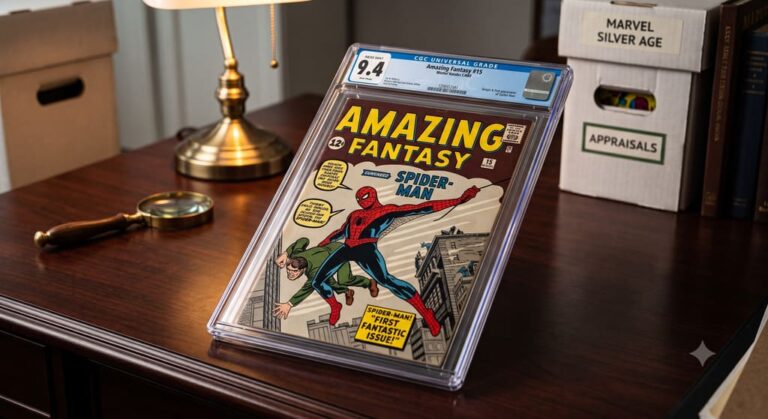
The Silver Age of Comics is widely considered one of the most important and collectible periods in comic book history. Spanning roughly 1956 through 1970, this era introduced many of the superheroes, villains, and storylines that continue to define modern comics, movies, and popular culture.
If you own a few key issues, inherited an original-owner collection, or spent decades assembling complete runs, knowing how to sell Silver Age comics affects both the selling experience and the value you receive.
At Sparkle City Comics, we’ve been buying and evaluating Silver Age comic collections since 1976. Over nearly five decades we’ve purchased everything from single key issues worth hundreds of thousands of dollars to complete original-owner collections containing thousands of comics.
What Are Silver Age Comics?
Most collectors consider the Silver Age to span approximately 1956 through 1970.
The era began with the introduction of the modern Flash in Showcase #4 and saw both DC and Marvel redefine the superhero genre. Many of its characters remain among the most valuable and recognizable in comics today.
Some of the era’s most famous books include:
- Showcase #4
- Fantastic Four #1
- Amazing Fantasy #15
- Incredible Hulk #1
- X-Men #1
- Avengers #1
- Daredevil #1
- Journey Into Mystery #83
- Tales of Suspense #39
- Green Lantern #1
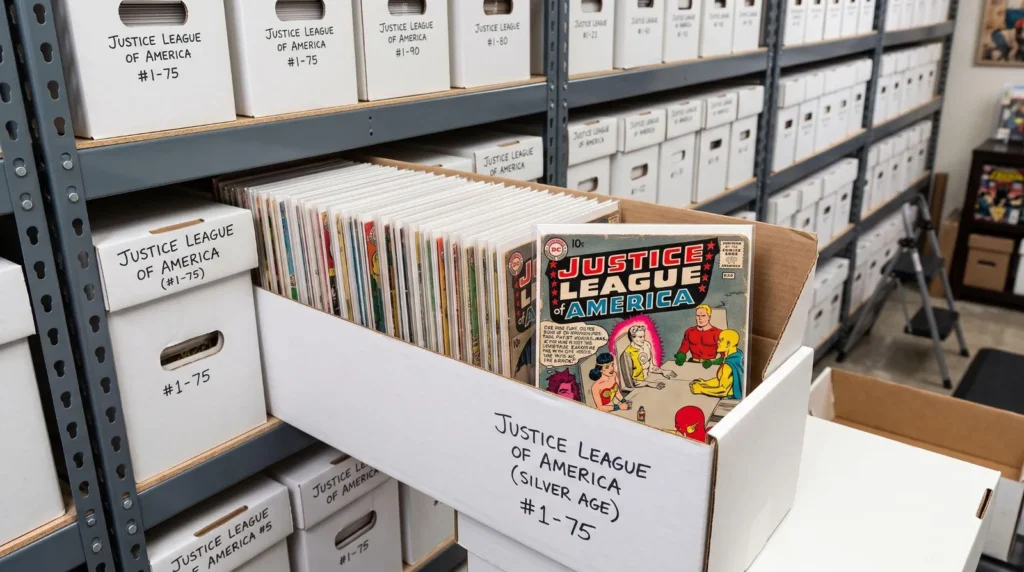
- Justice League of America #1
While these headline books receive the most attention, thousands of other Silver Age comics are actively collected and may have significant value.
Why Silver Age Comics Are So Valuable
The Silver Age represents the birth of the modern superhero universe.
Many of today’s most recognizable characters first appeared during this period, including Spider-Man, the Fantastic Four, the X-Men, the Avengers, Daredevil, the modern Green Lantern, and the Justice League. These books laid the foundation for decades of storytelling and still influence films and television.
Unlike Golden Age comics, which are often extremely scarce, many Silver Age books still survive in meaningful numbers, but truly high-grade copies remain surprisingly difficult to find. Historical importance, strong demand, and limited supply make it one of the hobby’s most actively collected eras.
Why People Sell Silver Age Comics
Some collectors purchased these books off the newsstand during the 1960s. Others inherited collections from parents or grandparents who never imagined comics would become valuable collectibles.
We also meet longtime collectors who want to downsize or pass their books on while they can still enjoy seeing someone else appreciate them.
Whatever your reason, understanding your collection before making decisions helps protect its value.
Before You Sell Your Silver Age Comics
Silver Age comics are now more than fifty years old and require careful handling.
Before selling your collection, avoid:
- Cleaning books yourself
- Amateur pressing
- Tape repairs
- Staple replacement
- Writing grades on books
- Separating complete runs
- Throwing away original bags and backing boards before evaluation
Many seemingly minor changes can affect collector interest and, in some cases, reduce value.
If you’re unsure whether a book needs conservation or professional pressing, leave it exactly as you found it until it has been evaluated.
Organizing Your Collection
We recommend sorting your books by:
- Publisher
- Title
- Issue number
- Publication year
- Graded vs. raw books
If possible, identify complete or nearly complete runs.
Examples include Marvel runs of Amazing Spider-Man, Fantastic Four, Avengers, X-Men, Journey Into Mystery, Tales of Suspense, and Strange Tales, and DC runs of Batman, Detective Comics, Superman, Action Comics, Flash, Green Lantern, and Justice League of America.
An organized collection is easier to evaluate accurately and ensures important books aren’t overlooked.
Should You Get a Professional Appraisal?
Not every Silver Age collection requires a formal appraisal.
If you’re selling your comics, an experienced buyer can often provide a free market evaluation based on current collector demand.
Formal written appraisals are generally most appropriate for:
- Estate planning
- Probate
- Insurance
- Charitable donations
- Legal matters
If your goal is simply to sell your collection, a market evaluation is often the most practical first step.
What Makes Silver Age Comics Valuable?
First Appearances
The first appearances listed above, led by Amazing Fantasy #15 (Spider-Man), remain among the strongest drivers of collector demand.
Condition Matters More Than Most Sellers Realize
Because these books were printed on inexpensive newsprint and meant to be read, not preserved, truly high-grade examples are much scarcer than many collectors realize.
Books with:
- Bright colors
- Sharp corners
- White page quality
- Minimal spine wear
- No restoration
often command substantial premiums over lower-grade copies.
Complete Runs
Many collectors seek complete or nearly complete runs. A nearly complete run of Amazing Spider-Man, Fantastic Four, Justice League of America, or Flash may generate stronger interest than selling the books individually.
Professional buyers evaluate both the individual key issues and the strength of the run as a whole.
Artist and Creator Appeal
Collectors also follow creators. Books featuring artwork or stories by Jack Kirby, Steve Ditko, Stan Lee, Neal Adams, Carmine Infantino, Gil Kane, John Romita Sr., and Curt Swan often receive extra attention.
Restoration
Color touch, staple replacement, trimming, tear seals, or married pages can all influence value. Professional buyers evaluate restored books differently than unrestored examples, making an experienced inspection especially important before selling.
Your Selling Options
| Selling Method | Speed | Potential Return | Fees | Best For |
|---|---|---|---|---|
| Dealer | Fast | High | None | Most collections |
| Consignment | Medium | Higher | Commission | Valuable collections |
| Auction House | Slow | Highest | Seller commission | Exceptional keys |
| eBay | Slow | High | Selling fees | Experienced sellers |
| Local Comic Shop | Fast | Varies | None | Small collections |
Every collection is different. A handful of major Silver Age keys may be best suited for auction or consignment, while complete original-owner collections are often ideal candidates for a direct purchase. An experienced buyer can help determine which option best fits your goals.
How Sparkle City Evaluates Silver Age Collections
When evaluating Silver Age comics, we consider publication era, publisher, first appearances, key issues, complete runs, overall condition, restoration, graded books, original owner history, and current market demand.
Rather than focusing solely on the biggest keys, we evaluate the collection as a whole to understand its overall strength.
From Our Experience
One thing we’ve learned after buying Silver Age collections for nearly five decades is that sellers often underestimate the value of books beyond the obvious first appearances.
Complete runs, difficult-to-find high-grade issues, iconic covers, annuals, and early supporting character appearances frequently attract strong interest from experienced collectors. We’ve also purchased many original-owner collections where books remained untouched for decades, preserving exceptional page quality and condition that can significantly affect value.
Another common misconception is that only Marvel books matter. While Marvel produced many of the era’s most famous first appearances, Silver Age DC comics such as Showcase, Flash, Green Lantern, Justice League of America, Batman, and Detective Comics remain highly desirable in today’s market.
Helpful Guides for Comic Book Sellers
If you’re researching your collection, these guides may also help:
- How to Sell DC Comics
- How to Sell Marvel Comics
- How Much Are My Comic Books Worth?
- Comic Book Consignment Guide
- Best Places to Sell Comic Books Online
- Estate Comic Book Services
Frequently Asked Questions
What years are considered Silver Age comics?
Most collectors define the Silver Age as approximately 1956 through 1970, beginning with Showcase #4 and ending as the Bronze Age emerged in the early 1970s.
Are all Silver Age comics valuable?
No. While many Silver Age books are highly collectible, value depends on condition, rarity, character popularity, first appearances, creator appeal, and collector demand.
Should I grade my Silver Age comics before selling?
Not necessarily. Professional grading can benefit certain high-value books, but many collections can be accurately evaluated without grading every issue first.
Are complete Silver Age runs worth more?
Often, yes. Complete or nearly complete runs are attractive to collectors and can sometimes command premiums beyond the value of the individual books.
Should I clean or press my Silver Age comics before selling?
Generally, no. Leave the books in their current condition until they’ve been professionally evaluated. Improper cleaning or restoration can reduce collector interest and affect value.
Ready to Sell Your Silver Age Comics?
From a single Amazing Fantasy #15 to a complete Fantastic Four run or an original-owner collection stored for decades, Sparkle City Comics can help.
Since 1976, we’ve purchased Silver Age comic collections of every size, from a handful of key issues to entire estates and warehouse collections. We’ll explain your options, answer your questions, and provide a free, confidential, no-obligation evaluation.
Contact Sparkle City Comics today to discover what your Silver Age comic collection may be worth.