
In this article
Quick Summary
Bronze Age comics, published from about 1970 through 1985, sell best when you know which key issues, first appearances, and high-grade copies you own and choose a buyer who evaluates each book individually. Knowing how to sell Bronze Age comics starts with understanding condition, demand, and editions. We have purchased Bronze Age collections since 1976, from single keys like Incredible Hulk #181 to entire warehouses.
A Complete Guide to Selling Bronze Age Comic Books
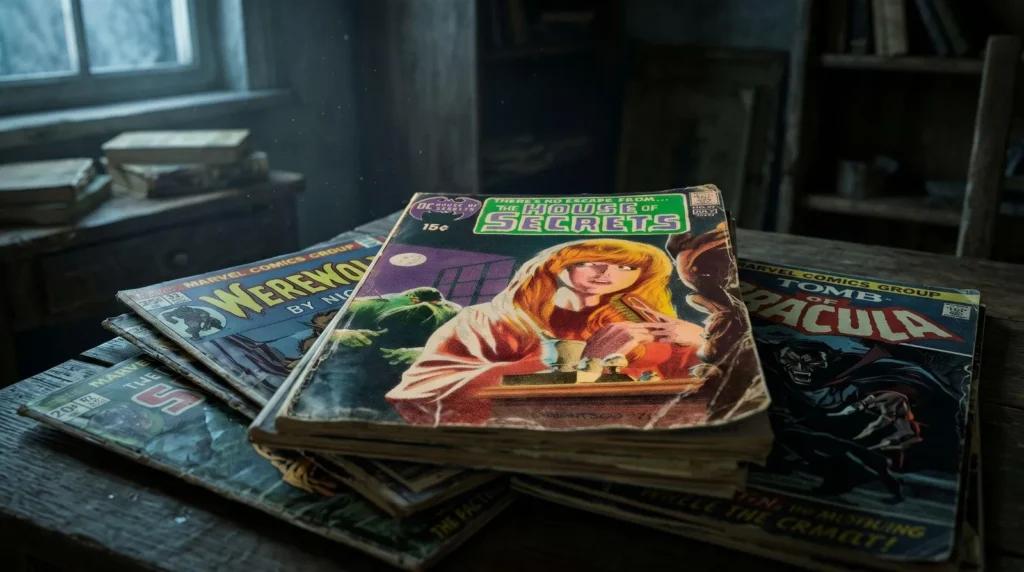
The Bronze Age of Comics marked one of the most exciting periods in comic book history. Beginning around 1970 and continuing through the mid-1980s, the era introduced darker storytelling, antiheroes, horror comics, socially relevant themes, and many of today’s most collectible first appearances.
Whether you own a handful of key issues, complete superhero runs, horror titles, or an inherited original-owner collection, knowing how to sell Bronze Age comics and how they are valued helps you get the most from your sale.
At Sparkle City Comics, we’ve been buying Bronze Age comic collections since 1976. During that time, we’ve purchased everything from warehouse collections and comic shop inventories to complete original-owner collections that had remained untouched for decades.
What Are Bronze Age Comics?
Most collectors consider the Bronze Age to span approximately 1970 through 1985.
The era followed the optimism of the Silver Age and introduced more mature themes, complex characters, horror, martial arts, science fiction, and social commentary. Comic books became more sophisticated, while publishers experimented with new genres and storytelling techniques.
Many of today’s most valuable Bronze Age comics feature the first appearances of characters who remain incredibly popular with collectors.
Some of the era’s best-known books include:
- Incredible Hulk #181 (Wolverine)
- Giant-Size X-Men #1
- Amazing Spider-Man #129 (Punisher)
- Werewolf by Night #32 (Moon Knight)
- Iron Fist #14 (Sabretooth)
- Marvel Spotlight #5 (Ghost Rider)
- Batman #251 (Classic Joker Cover)
- House of Secrets #92 (Swamp Thing)
- Star Wars #1
- Teenage Mutant Ninja Turtles #1
While these books often make headlines, countless other Bronze Age comics remain highly collectible.
Why Bronze Age Comics Are So Popular
It also saw a resurgence of horror comics, the growth of independent publishers, and some of the most memorable artwork ever produced.
Because many Bronze Age comics are old enough to be scarce but young enough that many collectors remember buying them off the rack—they remain one of the strongest segments of today’s comic book market.
Why People Sell Bronze Age Comics
Some collectors bought these comics during the 1970s and early 1980s before putting them away for decades. Others inherited collections from parents or relatives who collected during that period.
We also meet many longtime collectors who are downsizing, retiring, or simply choosing to focus on different areas of the hobby.
Before You Sell Your Bronze Age Comics
Before selling your collection, avoid:
- Cleaning books yourself
- Amateur pressing
- Tape repairs
- Staple replacement
- Separating complete runs
- Throwing away original bags or backing boards
- Writing grades directly on comics
Many Bronze Age books were printed on better paper than earlier eras, but improper handling can still reduce collector appeal.
If you’re unsure whether a book should be cleaned or professionally pressed, leave it untouched until it has been evaluated.
Organizing Your Collection
Before requesting an evaluation, organize your books by:
- Publisher
- Title
- Issue number
- Publication year
- Graded vs. raw comics
If possible, identify complete runs.
Examples include:
Marvel
- Amazing Spider-Man
- X-Men
- Uncanny X-Men
- Avengers
- Incredible Hulk
- Marvel Team-Up
- Marvel Two-in-One
- Defenders
- Conan the Barbarian
DC
- Batman
- Detective Comics
- Superman
- Justice League of America
- Legion of Super-Heroes
- House of Mystery
- House of Secrets
- Swamp Thing
Organization helps buyers evaluate your collection more efficiently while ensuring important books aren’t overlooked.
Should You Get a Professional Appraisal?
Not every Bronze Age collection requires a formal written appraisal.
If you’re planning to sell, an experienced buyer can often provide a free market evaluation based on current collector demand.
Formal appraisals are generally recommended for:
- Estate planning
- Probate
- Insurance
- Charitable donations
- Legal matters
What Makes Bronze Age Comics Valuable?
First Appearances
Many of the hobby’s most desirable first appearances occurred during the Bronze Age.
Examples include:
- Wolverine
- Punisher
- Moon Knight
- Ghost Rider
- Sabretooth
- Elektra
- Nova
Collector demand for these characters remains exceptionally strong.
Movie and Television Adaptations
Characters such as Wolverine, Punisher, Moon Knight, Ghost Rider, Swamp Thing, Nova, and Star Wars continue to attract new collectors whenever they appear in new media or are rumored for future projects.
While movie announcements can create temporary spikes in demand, truly important Bronze Age keys have maintained strong collector interest for decades because of their historical significance and lasting popularity.
Horror Comics
Bronze Age horror has become one of the fastest-growing areas of comic collecting.
Collectors actively seek titles such as:
- House of Mystery
- House of Secrets
- Tomb of Dracula
- Werewolf by Night
- Ghost Rider
- Swamp Thing
Many horror comics feature exceptional artwork and lower print runs than mainstream superhero titles.
Complete Runs
Complete or nearly complete runs of titles such as Uncanny X-Men, Amazing Spider-Man, Batman, Detective Comics, Conan the Barbarian, Tomb of Dracula, and Swamp Thing continue to attract significant collector interest.
Professional buyers evaluate the overall strength of a run, not just its key issues.
Artist and Creator Appeal
Collectors actively pursue Bronze Age books featuring creators such as:
- Neal Adams
- Bernie Wrightson
- John Byrne
- Frank Miller
- George Pérez
- Walt Simonson
- Jim Starlin
- Michael Golden
Exceptional artwork often increases collector demand beyond the importance of the story itself.
Direct Editions vs. Newsstand Editions
The Bronze Age saw the transition from traditional newsstand distribution to the direct market.
By the late 1970s and early 1980s, many comic books were printed in both Newsstand Editions and Direct Editions. The comic inside is typically identical, but the distribution method can significantly affect collector demand.
Newsstand Editions were sold in grocery stores, pharmacies, convenience stores, and other retail locations. Unsold copies were often returned or destroyed, and the books that did sell were usually read multiple times before being discarded. As a result, high-grade newsstand copies are often much harder to find today.
Direct Editions were sold directly to comic book stores through specialty distributors. Because collectors frequently purchased these books specifically to preserve them, many survive in much better condition.
For certain issues, particularly from the late 1970s and early 1980s, high-grade Newsstand Editions can command substantial premiums over their Direct Edition counterparts. The difference varies by issue, publisher, and grade, so each book should be evaluated individually.
When evaluating a Bronze Age collection, we examine not only the issue itself but also whether it is a Newsstand or Direct Edition and how that affects current collector demand.
Independent Publishers and Overlooked Bronze Age Books
Although Marvel and DC dominate most discussions about Bronze Age comics, manycollections include books from smaller publishers that have developed devoted collector followings.
Publishers such as Pacific Comics, First Comics, Eclipse, Comico, Kitchen Sink Press, Gold Key, Charlton, Warren Publishing, and Heavy Metal Magazine introduced innovative creators, creator-owned projects, and genres that expanded the comic book hobby beyond traditional superheroes.
Likewise, magazines such as Savage Sword of Conan, Creepy, Eerie, Vampirella, and Heavy Metal continue to attract strong interest because of their artwork, mature storytelling, and lower survival rates.
We’ve purchased many collections where sellers focused only on superhero keys while overlooking horror magazines, independent comics, black-and-white publications, and short-lived publisher runs that were surprisingly desirable to today’s collectors.
Many of these books have become difficult to locate in high grade, and collector demand continues to grow.
If your collection includes magazines, underground comix, or publisher-specific runs, our guides on comic book appraisals and selling comic book collections can help you better understand your options before selling.
Condition
Condition remains one of the most important factors affecting value.
High-grade Bronze Age books with:
- Bright colors
- Sharp corners
- White pages
- Tight staples
- Minimal spine wear
- No restoration
can sell for dramatically more than lower-grade copies.
Your Selling Options
| Selling Method | Speed | Potential Return | Fees | Best For |
|---|---|---|---|---|
| Dealer | Fast | High | None | Most collections |
| Consignment | Medium | Higher | Commission | Valuable collections |
| Auction House | Slow | Highest | Seller commission | Exceptional key books |
| eBay | Slow | High | Selling fees | Experienced sellers |
| Local Comic Shop | Fast | Varies | None | Small collections |
A few high-value keys may perform well at auction, while large original-owner collections are often better suited for direct purchase. The best option depends on your goals, timeline, and the makeup of your collection.
How Sparkle City Evaluates Bronze Age Collections
When evaluating collections, we consider:
- Publication era
- Publisher
- First appearances
- Key issues
- Complete runs
- Condition
- Restoration
- Graded books
- Original-owner history
- Current collector demand
Rather than focusing only on headline books, we evaluate the overall strength of the collection and how it fits today’s market.
From Our Experience
After buying Bronze Age collections for nearly five decades, we’ve found that many sellers underestimate how diverse the Bronze Age market has become.
Most owners immediately recognize books like Incredible Hulk #181, Giant-Size X-Men #1, or Amazing Spider-Man #129, but experienced collectors are often just as excited about complete runs of Tomb of Dracula, House of Mystery, House of Secrets, Conan the Barbarian, Master of Kung Fu, or early independent publishers. We’ve even purchased collections where the strongest interest came from magazines, underground comix, or books the original owner assumed had very little value.
Another trend we’ve noticed is the exceptional condition of many original-owner Bronze Age collections. By the late 1970s, many collectors had begun storing their comics in bags and boards almost immediately after purchase. We regularly evaluate collections that have remained untouched for forty or fifty years, preserving colors, page quality, and structural integrity that collectors actively seek today.
Finally, we’ve learned that Bronze Age collections often contain hidden surprises. A seller may contact us about a handful of well-known keys, only for us to discover difficult-to-find Newsstand Editions, complete publisher runs, scarce horror books, or overlooked first appearances that significantly strengthen the collection as a whole. Every Bronze Age collection deserves a thorough evaluation before any decisions are made.
Helpful Guides for Comic Book Sellers
If you’re researching your collection, these guides may also help:
- How to Sell Silver Age Comics
- How to Sell Golden Age Comics
- How to Sell Marvel Comics
- How to Sell DC Comics
- How Much Are My Comic Books Worth?
- Comic Book Consignment Guide
- Best Places to Sell Comic Books Online
Frequently Asked Questions
What years are considered Bronze Age comics?
Most collectors define the Bronze Age as approximately 1970 through 1985, although some consider the transition to have begun slightly earlier or ended slightly later.
Are Bronze Age comics valuable?
Many are. Value depends on first appearances, condition, rarity, artist, character popularity, and current collector demand.
Are horror comics from the Bronze Age collectible?
Absolutely. Titles like Tomb of Dracula, House of Mystery, House of Secrets, Werewolf by Night, and Swamp Thing remain highly sought after by collectors.
Should I grade my Bronze Age comics before selling?
Not necessarily. While grading can increase the value of certain books, many collections can be accurately evaluated without grading every issue.
Are complete Bronze Age runs worth more?
Often, yes. Complete or nearly complete runs are attractive to collectors because they eliminate years of searching for missing issues.
Are Newsstand Editions worth more than Direct Editions?
Sometimes.
High-grade Newsstand Editions are often harder to find than Direct Editions because they were sold in traditional retail stores and received more wear. Whether one is worth more depends on the specific issue, its rarity, and its condition.
Should I clean or press my Bronze Age comics before selling?
Generally, no. Leave the books in their current condition until they’ve been professionally evaluated. Improper cleaning or restoration can reduce collector interest and affect value.
Ready to Sell Your Bronze Age Comics?
From a single Incredible Hulk #181 to a complete Uncanny X-Men run or an original-owner collection carefully preserved for decades, Sparkle City Comics can help.
Since 1976, we’ve purchased Bronze Age comic collections of every size, from individual key issues to entire warehouse collections and comic shop inventories. We’ll explain your options, answer your questions, and provide a free, confidential, no-obligation evaluation.
Contact Sparkle City Comics today to discover what your Bronze Age comic collection may be worth.


