In this article
Quick Summary
Comic book grading is worth it only when the expected increase in value clearly exceeds grading fees, pressing, shipping, and insurance. A $100 raw comic can cost $75 or more to grade, so many lower-value books sell better raw. As one of the earliest CGC Authorized Dealers (#25), we help collectors decide which books to grade, which service fits, and which to sell raw.
Should You Have Your Comic Books Professionally Graded Before Selling?
One of the most common questions we hear is “Should I have my comic books professionally graded before I sell them?” The answer surprises many people: not always.
Professional comic book grading has transformed the hobby by creating consistency, improving buyer confidence, and helping establish market value. It can significantly increase resale value, but it may also provide little benefit, or even reduce your return, once grading fees, shipping, insurance, and turnaround times are considered.
At Sparkle City Comics, we evaluate collections every week, from a handful of key issues to warehouse-sized collections of tens of thousands of comics. One of our most valuable services is helping collectors decide which books to grade, which grading service fits, which comics should stay raw, and which selling strategy will produce the strongest return.
Grading is an investment, and it should generate a return.
What Is Professional Comic Book Grading?
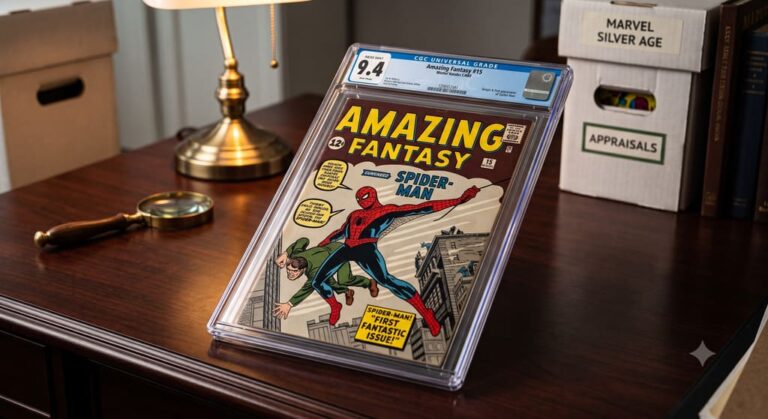
Professional, or third-party, grading means having a comic independently evaluated by a grading company. After examining condition, authenticity, restoration status, and overall presentation, the company assigns a standardized numerical grade and encapsulates the comic in a tamper-evident holder, or slab.
Buyers gain confidence that the comic was judged by consistent industry standards rather than the seller’s opinion, and for higher-value books that confidence often translates directly into stronger prices.
Choosing a Comic Book Grading Service
CGC and CBCS are historically the two most recognized third-party grading services, but several operate in the hobby, and the right choice depends on your goals and the comic being submitted. Collectors often weigh:
- Market acceptance
- Turnaround times
- Authentication services
- Signature programs
- Label options
- Resale performance
- Submission costs
The more important question is whether a comic should be graded at all. Once that’s decided, we can help choose the service that best fits your goals and books.
Why Professionally Graded Comics Often Sell for More
Buying a raw comic online always involves uncertainty. Photos rarely reveal every defect, and two collectors may grade the same comic differently. Professional grading removes much of that uncertainty by providing:
- Independent condition verification
- Standardized grading
- Tamper-evident encapsulation
- Authentication
- Restoration identification
- Greater buyer confidence
- Easier comparison between copies
- Increased market liquidity
When buyers know exactly what they’re getting, they bid more aggressively, especially on expensive comics where small condition differences can mean thousands of dollars.
The Biggest Mistake Collectors Make
A common misconception is that every valuable comic should be professionally graded. It shouldn’t.
We’ve evaluated countless collections where the owner planned to grade every key issue, only to find that many wouldn’t gain enough value to justify the cost. Grading is never automatic; each comic should be judged on:
- Estimated condition
- Current market value
- Collector demand
- Submission costs
- Turnaround time
- Potential return on investment
Our goal has never been to create the most slabs. It’s to maximize your overall return.
When Professional Grading Can Increase Resale Value
Professional grading often makes excellent financial sense for books such as:
Major First Appearances
Books like Amazing Fantasy #15, Fantastic Four #1, Incredible Hulk #181, Giant-Size X-Men #1, and Amazing Spider-Man #129 often benefit substantially, because buyer confidence matters more as values rise.
Golden Age Comics
Golden Age comics are often scarce, historically significant, and heavily scrutinized, so authentication and grading frequently make them easier to sell.
High-Grade Silver Age Comics
Condition premiums become dramatic in higher grades. The difference between an 8.5 and a 9.4 can be thousands, or even tens of thousands, of dollars depending on the book.
Valuable Bronze Age Keys
Many Bronze Age first appearances and iconic covers perform exceptionally well when professionally graded.
High-End Modern Comics
Certain modern keys, retailer variants, incentive covers, and low-print-run books often derive much of their value from achieving very high grades such as 9.8.
Investment-Quality Collections
Collectors purchasing expensive books as investments frequently prefer professionally graded examples because the condition has been independently verified.
When Grading May NOT Be Worth It
Submission fees are only one part of the cost. Collectors should also consider:
- Shipping
- Insurance
- Pressing
- Cleaning
- Return shipping
- Turnaround time
For many books, those costs can reduce or eliminate any added profit. Grading may not be worthwhile if:
- The comic has relatively low market value.
- Heavy wear limits the expected grade.
- The increase in value doesn’t exceed grading expenses.
- Immediate liquidity is more important than maximizing value.
- You’re selling a large collection where only a small percentage of books justify grading.
One of the most valuable things an experienced dealer can do is identify which books deserve grading and which don’t.
| Situation | Professional Grading Often Makes Sense | Selling Raw May Be Better |
|---|---|---|
| Major first appearances | ✅ | |
| High-grade Golden/Silver Age books | ✅ | |
| Investment-quality comics | ✅ | |
| Lower-value books | ✅ | |
| Heavily worn common comics | ✅ | |
| Collections needing immediate liquidation | ✅ | |
| Comics with limited market demand | ✅ | |
| Rare variants in exceptional condition | ✅ |
When Grading Can Actually Cost You Money
Many collectors assume grading automatically increases value, but the math doesn’t always work. Take a comic worth about $100 raw: after shipping, insurance, grading fees, and pressing, your investment may approach $75 or more.
If the graded copy sells for $150, the $50 gain doesn’t cover those costs, and selling raw would have produced a better result. Grading is an investment, not a guarantee.
A Real-World Example
Consider two collectors, Sam and Bob. Sam owns a mid-grade copy of a Bronze Age key worth about $150 raw. After pressing, grading fees, shipping, insurance, and return shipping, he has invested about $80.
The certified comic sells for $225. The price rose $75, but grading expenses consumed all of it.
Bob owns a beautiful high-grade copy of Incredible Hulk #181 worth several thousand dollars. For Bob, grading dramatically increases buyer confidence, attracts more bidders, and may raise the final price far beyond the grading costs.
Grading isn’t good or bad; the right strategy depends on the individual comic.
How Buyers Think
Experienced collectors aren’t simply buying comic books. They’re buying confidence. Grading answers key questions before a comic changes hands:
- Is it authentic?
- Has it been restored?
- What is its condition?
- Has that condition been independently verified?
- Has the comic been altered?
Removing uncertainty almost always brings more buyers to compete for an expensive comic, and more competition generally produces stronger prices.
Does a Higher Grade Always Mean Higher Value?
Usually, but not always. Market demand still matters, and a common comic in 9.8 may be worth far less than a heavily worn copy of a major key.
Two comics with identical grades may also sell for different prices because of:
- Eye appeal
- Page quality
- Centering
- Color vibrancy
- Collector demand
- Market timing
Grading standardizes condition; it doesn’t eliminate supply and demand.
Raw vs. Graded Comics
It depends entirely on the book.
Raw comics appeal to collectors who enjoy grading books themselves or are hunting for high-grade submission candidates. Graded comics attract buyers who value certainty and standardized condition.
Lower-value comics often sell well raw because buyers won’t pay grading premiums, while higher-value comics generally benefit from the confidence professional authentication provides. Knowing where that line falls is one of the most valuable parts of a professional evaluation.
Which Comics Should You Grade First?
If you’re working with a large collection, grading usually makes the most sense for:
- Major first appearances
- Golden Age keys
- High-grade Silver Age comics
- Valuable Bronze Age books
- Rare variants
- Investment-quality modern keys
- Exceptional pedigree books
- Original owner high-grade copies
Most collections contain only a small percentage of books that truly benefit from grading, and selecting the right ones often produces far better returns than grading everything.
Should You Press a Comic Before Grading?
Sometimes. Professional pressing improves presentation by removing certain non-color-breaking defects. It is not restoration and does not add or replace original material.
However, pressing cannot:
- Repair tears
- Remove color-breaking creases
- Replace missing paper
- Reverse water damage
- Eliminate restoration
Not every comic benefits enough to justify the expense, so each book should be evaluated individually.
Market Timing Matters
Timing matters as much as condition. Demand for certain comics can rise dramatically after:
- Movie announcements
- Television adaptations
- Video game releases
- Anniversary celebrations
- Major character storylines
Sometimes grading before selling maximizes value; other times, selling raw while demand is high produces the better result.
Grading Takes Time
Turnaround times vary considerably with submission volume and service level. If you want to catch a fast-moving market or need immediate liquidity, selling raw may make more sense than waiting.
We’ve occasionally advised collectors not to submit comics right away, not because the books weren’t valuable, but because market conditions favored a different strategy.
Why We Sometimes Recommend Selling Raw
Collectors are sometimes surprised when we recommend not grading a valuable comic. Grading costs may outweigh the added value, turnaround times may not fit the seller’s goals, the comic may already present well enough to sell raw, or the collector may need immediate liquidity.
One of the most rewarding parts of our job is showing collectors that maximizing value isn’t always about spending more. Sometimes the smartest decision is knowing which books deserve additional investment and which don’t.
How We Decide Whether a Comic Should Be Graded
Before recommending grading, we ask:
- Is the comic valuable enough to justify grading costs?
- What grade is it realistically likely to receive?
- Would professional pressing improve its presentation?
- How strong is current collector demand?
- Would the comic perform better through direct sale or consignment?
- Does the owner’s timeline justify the grading turnaround?
Sometimes the answers point to grading, sometimes to selling raw, and sometimes to consigning only the highest-value books while selling the rest directly. There isn’t a universal formula, which is why experience matters.
Not Every 9.8 Is Created Equal
Two comics with the same numerical grade don’t always sell for the same amount. Factors such as these all influence what buyers will pay:
- Eye appeal
- White page quality
- Strong centering
- Vibrant colors
- Exceptional presentation
- Pedigree designation
- Signature Series certification
Grading standardizes condition, but collectors still evaluate the comic itself. We’ve seen buyers pay substantial premiums for exceptional eye appeal over another copy with the exact same grade.
How Sparkle City Comics Helps
As one of the hobby’s earliest CGC Authorized Dealers (#25), we’ve helped collectors navigate grading since the earliest days of third-party certification. We evaluate not only whether a comic can be graded, but whether grading will improve its financial outcome.
Before recommending grading, we consider:
- Current market value
- Estimated grade
- Collector demand
- Submission costs
- Potential return on investment
- Selling strategy
- Collection size
We’ll help determine:
- Which books should be graded
- Which books should remain raw
- Whether pressing is worthwhile
- Whether consignment or direct sale makes more sense
- The most effective strategy for maximizing your results
Many conversations start with “I thought I should grade everything.” After reviewing the collection together, we often find only a handful of books truly justify it.
Our recommendations come from decades of buying, selling, grading, consigning, and evaluating comic books, not the assumption that grading is always the answer.
Frequently Asked Questions
Does Professional Comic Book Grading Increase Value?
Often, but not always. Grading increases buyer confidence, but its costs should be weighed against the comic’s expected increase in value.
Should Every Key Issue Be Professionally Graded?
No. Condition, rarity, market demand, and grading costs all determine whether grading makes financial sense.
Should I Grade My Entire Collection?
Usually not. Most collections contain only a small percentage of books that justify grading, and identifying them produces better overall returns.
Should Every Comic Be Pressed Before Grading?
No. Pressing can improve certain defects, but not every comic benefits enough to justify the cost.
Can Professional Grading Reveal Problems I Didn’t Know About?
Yes. Grading may identify restoration, trimming, married pages, detached centerfolds, color touch, or other issues that affect demand and value.
Can Sparkle City Comics Help Me Decide Which Books Should Be Graded?
Absolutely. Helping collectors decide which books should and shouldn’t be graded is one of the services we provide most often.
Can I Remove a Comic From a CGC Holder?
Yes, but doing so permanently voids the certified grade. Most collectors leave comics encapsulated unless they have a specific reason to resubmit, press, or conserve the book.
Does Professional Grading Guarantee a Higher Selling Price?
No. Grading reduces uncertainty, but market demand, rarity, eye appeal, timing, and collector interest still determine the final price. The higher the comic’s value, the more buyer confidence matters.
Can I Sell My Comics Without Having Them Professionally Graded?
Absolutely. Many valuable comics sell successfully raw every day. Grading helps certain books, but it isn’t required for a successful sale.
Can I Submit Comics for Grading Myself?
Yes. You can submit directly to many grading companies, or work through an authorized dealer who can evaluate books, recommend a grading strategy, and manage the submission.
Does Cleaning a Comic Count as Restoration?
No. Professional dry cleaning and pressing are generally considered conservation because they don’t add, replace, or alter original material. Repairs such as color touch, trimming, or replacing missing pieces are classified as restoration.
Final Thoughts
Professional grading has permanently changed the hobby with greater consistency, transparency, and buyer confidence, but it should never be automatic. The best decisions weigh condition, rarity, market demand, submission costs, and timing together.
Whether you’re selling a single key issue, preparing an investment-quality collection, or liquidating an inherited estate, Sparkle City Comics can help determine which books to grade, which to keep raw, and which selling strategy will maximize your return.
Contact us today for a professional evaluation and personalized grading strategy.