
In this article
Quick Summary
To tell if a comic book has been restored, look for glossy spots, ink bleeding, bright replacement paper, glue residue, tape stains, cropped edges, and staple irregularities. Professional work is often subtle, so graders rely on ultraviolet light, magnification, and precise measurements. CGC and CBCS disclose restoration on the label, and while it usually lowers value, rare Golden Age keys can remain highly desirable.
Understanding Comic Book Restoration, Conservation & Their Effect on Value
One of the biggest surprises for new collectors is discovering that an expensive comic book has been restored. Knowing how to tell if a comic book has been restored protects you whether you’re buying or selling.
Restoring classic cars, paintings, furniture, and artifacts often increases their value.
Comic books are different: professional restoration often improves a comic’s appearance while reducing its market value. Many collectors strongly prefer unrestored examples, even with more wear.
Still, restored comics shouldn’t automatically be avoided.
We’ve evaluated everything from lightly conserved Golden Age keys to heavily restored comics with multiple repairs, and no two should be judged the same way.
Many remain highly collectible because the underlying book is exceptionally rare. Experienced collectors evaluate rarity first and restoration second.
At Sparkle City Comics, we’ve evaluated hundreds of thousands of comics over nearly five decades and regularly help collectors recognize restoration and understand its effect on resale value.
What Is Comic Book Restoration?
Comic book restoration is work performed after publication to improve a comic’s appearance, structural integrity, or completeness.
Some is done by skilled professionals using archival materials to preserve historically significant books; some is amateur repair that permanently alters the comic and reduces collector demand.
Experienced collectors want to know exactly what work was performed before deciding what to pay.
Restoration vs. Conservation
The terms are often used interchangeably, but they aren’t the same.
Restoration
Restoration attempts to improve a comic’s appearance by repairing, replacing, or disguising defects.
Common examples include:
- Color touch
- Piece replacement
- Tear seals
- Spine rebuilding
- Trimmed edges
- Glue repairs
- Staple replacement
Conservation
Conservation preserves the comic and minimizes future deterioration rather than improving its appearance.
Examples include:
- Archival reinforcement
- Stabilizing tears
- Removing damaging tape
- Deacidification (when appropriate)
- Protective archival housing
Grading companies distinguish the two because collectors view them differently.
Why Restoration Matters
Collectors often pay substantial premiums for unrestored comics because originality matters. An unrestored comic is exactly what survived over decades.
Restoration doesn’t make a comic undesirable, but some collectors feel originality has been altered, so the pool of buyers may shrink and resale value can suffer.
Not All Restoration Is Equal
Restoration doesn’t all affect value the same way.
A tiny amount of professional color touch on an exceptionally rare Golden Age comic may have a very different impact than extensive trimming, rebuilt corners, and amateur glue repairs.
Conservation that preserves rather than disguises damage is viewed more favorably.
Restoration Doesn’t Affect Every Comic the Same Way
Light professional restoration on a scarce Golden Age key may have a modest impact because so few copies exist.
The same work on a common Silver Age or Bronze Age comic may matter much more because buyers have many unrestored copies to choose from.
With pedigree and original owner collections, collectors place a premium on originality and provenance, so restoration matters even more.
Common Types of Comic Book Restoration
Color Touch
One of the most common forms: ink applied where color has worn away. It can be very hard to detect without magnification or ultraviolet light. Possible signs:
- Ink covering spine stress
- Darkened corners
- Marker along edges
- Color extending into paper fibers
Tear Seals
Small tears may be reinforced with archival tissue or adhesive. Professional work can be nearly invisible; amateur tape repairs are easy to spot.
Piece Replacement
Missing portions of cover or interior paper may be replaced using donor paper.
Professional work can blend these so well that inexperienced collectors never notice.
Trimmed Edges
One of the most significant forms: edges are cut to improve appearance or remove damaged paper. Possible signs:
- Unusually sharp edges
- Smaller-than-normal dimensions
- Inconsistent cover overhang
- Cropped artwork
Trimmed books often experience substantial reductions in collector demand.
Spine Reinforcement
Loose covers or damaged spines may be rebuilt using tissue, glue, or archival reinforcement materials.
Staple Replacement
Missing or damaged staples may be replaced.
Graders examine staple placement, oxidation, and attachment for signs of replacement.
Cleaning
Cleaning is a gray area. Professional dry cleaning that removes surface dirt without altering the paper is generally not considered restoration.
Wet cleaning, chemical treatments, bleaching, or other aggressive methods permanently change the paper and may affect value.
Restoration Isn’t Always Easy to Detect
Restoration is sometimes obvious, but professional work can be extraordinarily subtle. Experienced graders may use:
- Ultraviolet light
- Magnification
- Side lighting
- Precise measurements
- Comparison with known examples
- Decades of hands-on experience
This is one reason professionally graded comics give buyers added confidence.
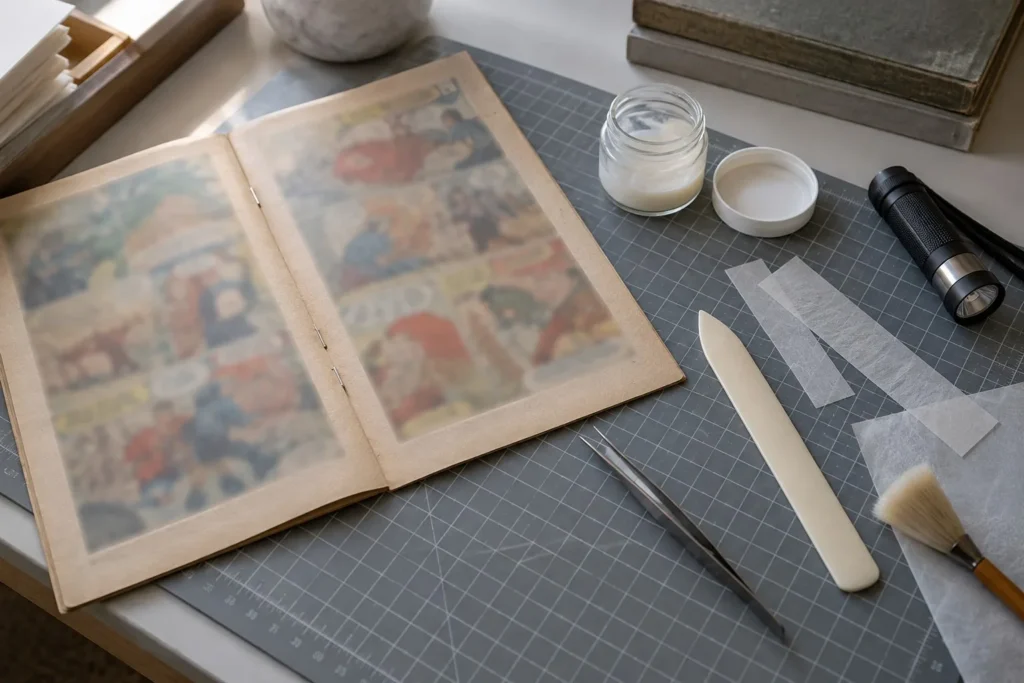
Signs a Comic May Have Been Restored
Watch for:
- Glossy spots
- Ink bleeding
- Bright replacement paper
- Glue residue
- Tape stains
- Cropped edges
- Different paper texture
- Staple irregularities
- Suspiciously perfect defects
- Inconsistent aging
None automatically indicates restoration, but each justifies a closer look.
Can Restoration Increase Value?
Restoration often improves appearance, but the market frequently values it lower because many collectors prefer original, unrestored books.
Still, a professionally restored copy of a rare Golden Age key may sell for tens or even hundreds of thousands of dollars because demand remains extraordinarily high.
The real question is how today’s market values that particular restoration on that particular comic.
How Professional Grading Helps
Professional grading companies such as CGC and CBCS inspect comics for signs of:
- Restoration
- Conservation
- Color touch
- Piece replacement
- Glue
- Trimming
- Staple replacement
Identified restoration is disclosed on the grading label.
Understanding the Purple Label
Collectors often refer to a “purple label” for restored comics. Certain grading companies use distinctive labels so buyers immediately recognize that work has been performed.
A restoration label doesn’t make a comic undesirable; it provides transparency. Some collectors avoid restored books, while others value the disclosure because they know exactly what was done before buying.
Should You Restore a Comic?
In most situations, no. One of the biggest mistakes is attempting amateur repairs. We’ve encountered comics repaired with:
- Scotch tape
- White glue
- Glue sticks
- Paint
- Permanent marker
- Household tape
- Staples
- Lamination
Nearly all of these reduce collector demand today.
If a comic may have significant value, leave it exactly as it is until it’s professionally evaluated.
What About Tape?
Many comics repaired decades ago now suffer more from the tape than the original damage. Aging tape causes:
- Staining
- Adhesive migration
- Paper discoloration
- Brittleness
- Additional paper loss during removal
The original owner usually meant well, but tape rarely improves value today.
Restoration vs. Eye Appeal
Some collectors intentionally purchase restored comics because they offer outstanding presentation at a significantly lower price.
A restored major Golden Age key may display beautifully for much less than an unrestored copy with similar eye appeal.
Some collectors value complete originality; others prioritize affordability and presentation. Neither is wrong.
Can Restoration Be Removed?
Sometimes. Tape or glue may be removable by experienced conservators; trimming and certain color touch may be permanent.
Removing restoration yourself can cause more damage and lower value further, so have a valuable comic professionally evaluated first.
How Sparkle City Comics Evaluates Restoration
We don’t simply ask whether restoration exists. We ask:
- What type of restoration was performed?
- How extensive is it?
- Was it professionally executed?
- Does it affect structural integrity?
- How rare is the comic?
- How will today’s market likely respond?
Understanding those differences comes from decades of buying, selling, grading, consigning, and evaluating comic books, not simply reading grading labels.
Restoration is only one factor. Rarity, historical significance, eye appeal, provenance, and current demand are often just as important.
Frequently Asked Questions
Is Restoration Always Bad?
No. Restoration often reduces demand, but it may also preserve historically important comics that would otherwise deteriorate. Its effect depends on the comic, the type of restoration, and market demand.
Can I Tell if My Comic Has Been Restored?
Sometimes. Obvious repairs may be visible, but professional restoration often requires specialized equipment and experience to detect.
Does Professional Grading Identify Restoration?
Yes. Grading companies inspect for common forms of restoration and disclose it on the label.
Should I Remove Old Tape?
Usually not. Improper removal often causes additional paper loss and further reduces value.
Can Restored Comics Still Be Valuable?
Absolutely. Many restored Golden Age and Silver Age keys remain highly desirable because of their rarity; collectors simply evaluate them differently.
Should I Buy a Restored Comic?
It depends on your goals. For enjoyment, a restored comic may offer excellent eye appeal at a lower price. For long-term investment, many collectors prefer unrestored books.
Will Restoration Always Lower the Grade?
Not necessarily. Grading companies evaluate restoration separately from technical condition. A restored comic may still receive a high technical grade, with the restoration disclosed.
Final Thoughts
Restoration isn’t simply “good” or “bad.” Some is subtle and has little impact; other forms, such as trimming or extensive color touch, dramatically change how collectors evaluate a comic.
Whether you’re evaluating an inherited collection, considering a major purchase, or preparing to sell, understanding restoration helps you avoid costly mistakes.
If you’re unsure whether a comic has been restored, or you’re buying, selling, or consigning a valuable book, Sparkle City Comics can help evaluate the comic, explain any restoration concerns, and recommend the strategy that best fits your goals.


